Rainer Schreg
Chair of Medieval and Postmedieval Archaeology, Otto-Friedrich-Universität Bamberg, Germany
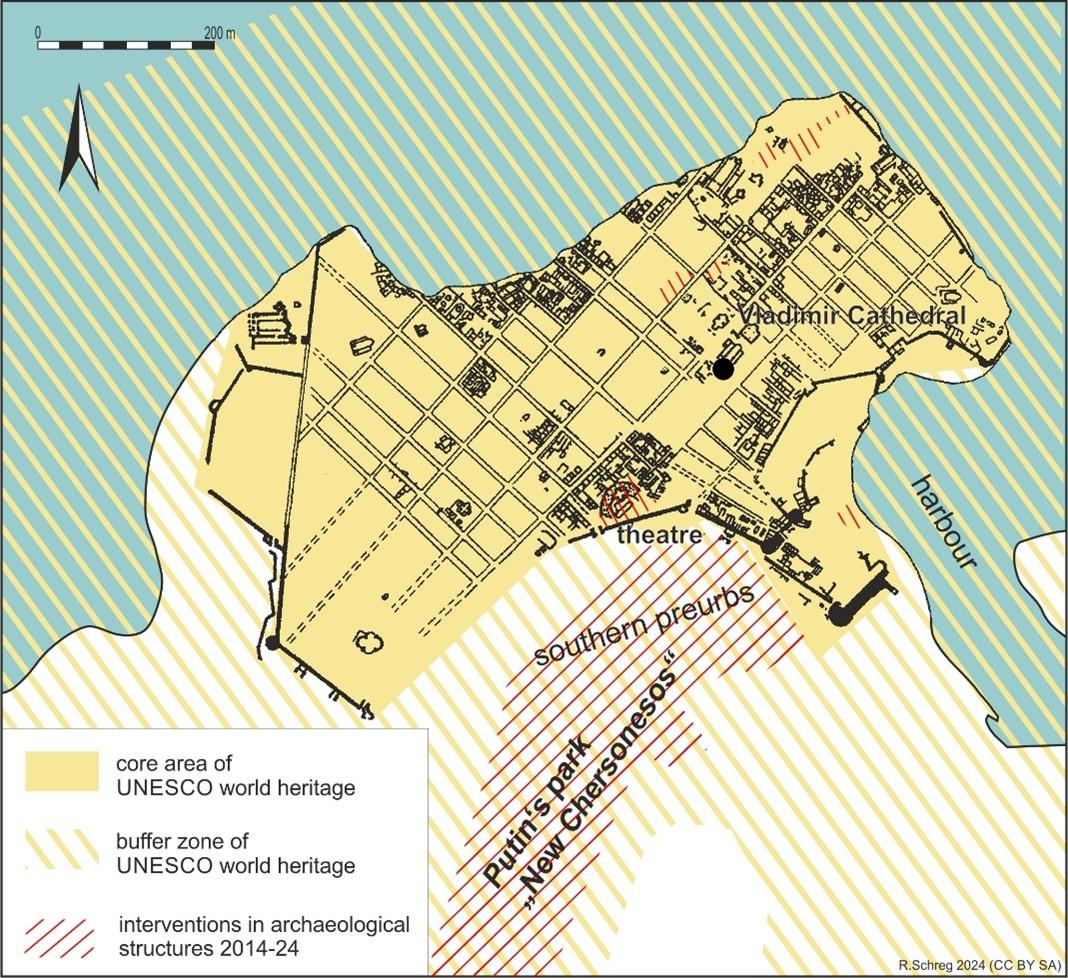
Figure 1. The UNESCO-site of Chersonesos and Putin’s New Chersonesos. Graphic by R. Schreg.
The archaeological site of Chersonesos, located in Crimea near Sevastopol, was recognised as a UNESCO World Heritage Site in 2013. See Figure 1. In 2014, Russia occupied Crimea. Soon after, President Vladimir Putin began transforming Chersonesos into a platform for promoting a distorted version of Russian history.
Chersonesos in Russian propaganda
After the annexation of Crimea, the Russian government tightened its grip on Chersonesos, placing the site under the control of Putin’s Ministry of Culture. This enabled significant developments aimed at presenting a narrative centred on Russian Orthodoxy and a great unified Russian identity. During a visit in 2015, Putin announced plans for the largest museum complex in Russia to be built at Chersonesos, intended to serve as a ‘spiritual and educational centre devoted to the history of Russian Orthodoxy and world Christianity’. In 2017, he emphasised the importance of developing Chersonesos into a ‘historical centre for all of Russia,’ which would foster a ‘clear understanding’ of Crimea as a crucial site for Russian national identity and spiritual heritage.
Construction commenced in 2020 under the Russian Ministry of Defence. In March 2023, on the 9th anniversary of the annexation, Putin visited the new ‘museum-temple complex New Chersonesos’, accompanied among others by Metropolitan Tikhon (Shevkunov), Chairman of the Patriarchal Council for Culture. In July 2024, the My History Foundation announced the completion of projects around Chersonesos, covering 24 hectares with 40,000 square metres of built area. This includes three museums dedicated to Christianity, antiquities, and Crimean history, accompanied by a ‘temple park’ (an open-air church unrelated to any ancient temple), an amphitheatre for historical performances, and various displays of theatricalised history aimed at drawing visitors.
In the centre of the ancient city stands the Vladimir Cathedral, completed in 1876 on the site where, according to legend, Vladimir the Great was baptised in 988. See Figure 2. Although there are doubts as to whether this baptism actually took place in Chersonesos, the site is an important reference point for the national identity of both Russia and Ukraine, as evidenced by the monumental statues to Vladimir the Great in Kyiv and Moscow, the latter erected by Putin in 2016.
Once connected to the cathedral, the Vladimir monastery was dissolved after the Russian Revolution and re-established after the end of the Soviet Union. Large areas of the archaeological site including the old museum and the cathedral are now property of the monastery and public access is restricted on the occasion of services (For Post 15.2.2024).
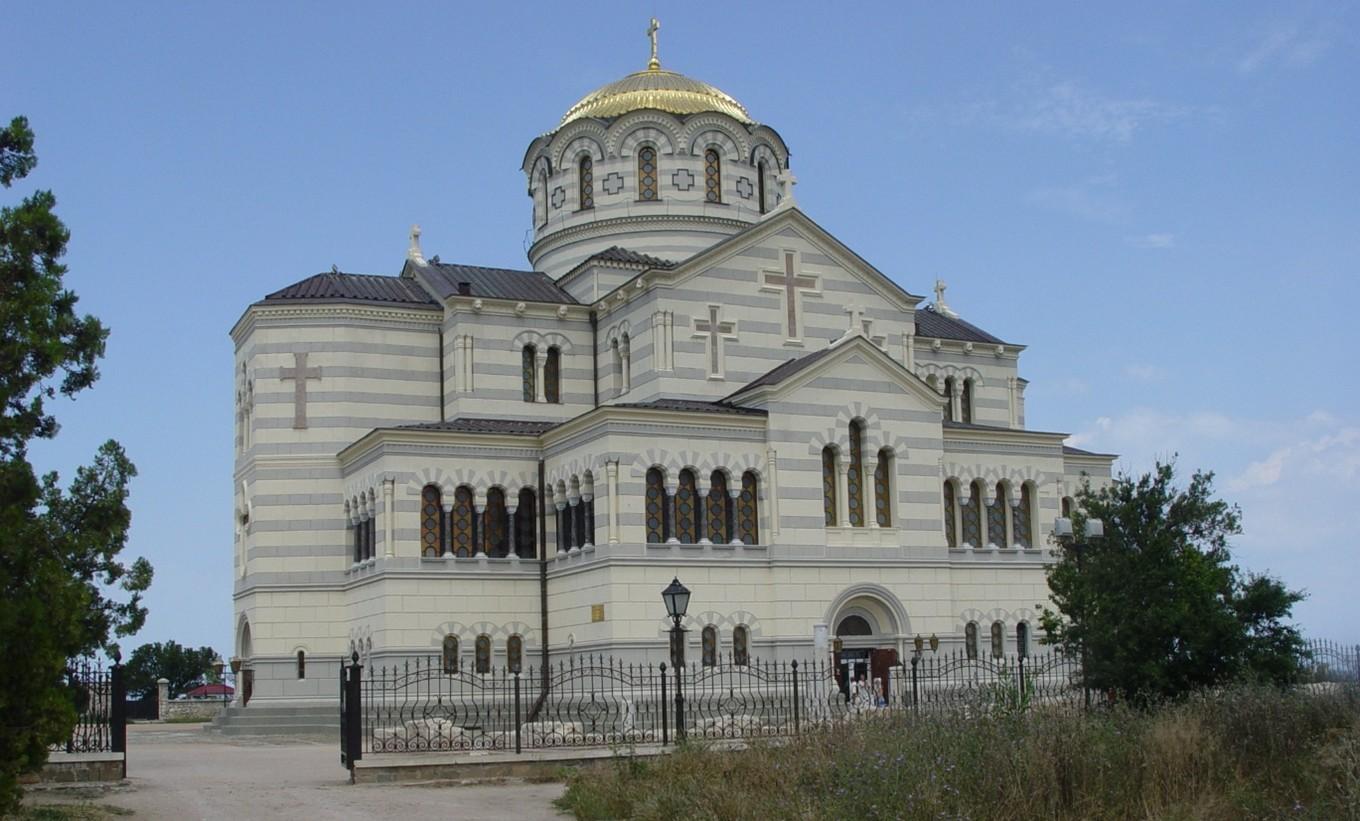
Figure 2. Chersonesos: Vladimir cathedral in 2006. Photo by R. Schreg.
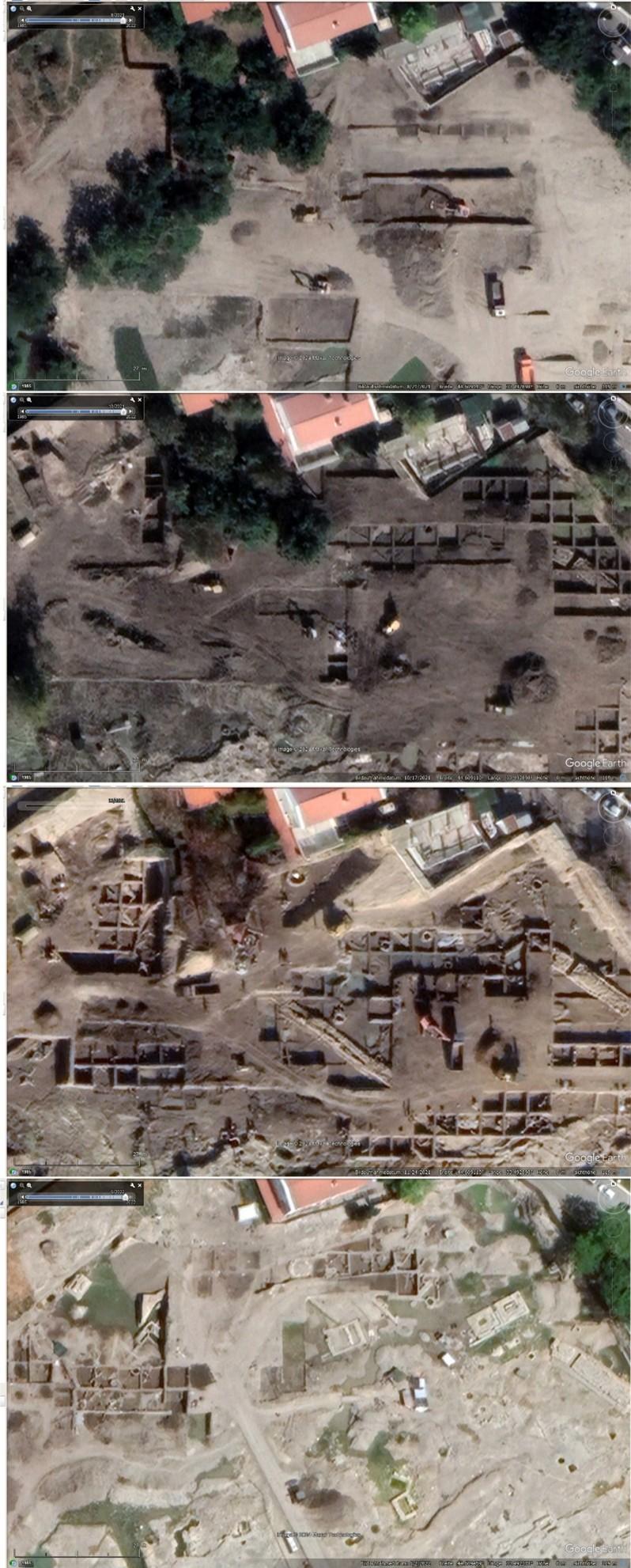
Figure 3. Chersonesos: excavations in Google Earth, June 2021 – June 2022. Image from Google Earth/Maxar Technologies.
Large scale excavations as never done before
Even if Putin’s history park is not within the protected zone of the UNESCO World Heritage designation, it is situated in its buffer zone and in the centre of ancient suburbs and cemeteries outside the town walls. Earlier studies suggested this area may contain later medieval settlement activities crucial for understanding the transformation from Byzantine Chersonesos to new centres in nearby mountains areas, such as the Mangup ‘cave town’.
Within two years, 8.6 hectares of a complex archaeological site were excavated. 21,322 archaeological features and reportedly 3-4 million artefacts from the Hellenistic period to the 20th century were discovered. See Figure 3. In the Hellenistic and Roman periods, the area was a burial place with a 4th-century BC temple, ‘crypts with diverse and rich burial inventory, and ritual architectural structures; a necropolis from the early Christian period with earthen burials and rock-cut crypts featuring complex architecture; hydraulic structures for water storage (cisterns and wells), nymphae, and a baptismal pool; economic and production buildings, roads, retaining and defensive walls; a French trench from the Crimean War of 1854–1855; yurt-like structures from the 19th century; economic buildings from the early 20th century; and traces of the defence of Sevastopol during the Great Patriotic War’ (Solovyova 2024, 9).
The rescue excavations in the main area were done under significant time and political pressure, involving various prestigious Russian institutes, including the Institute of Archaeology of Crimea, the Russian Academy of Sciences, the State Hermitage, and others. In a first publication, Natalia F. Solovyova, Deputy Director of the Institute for the History of the Material Culture in St. Petersburg refers to a ‘unique challenge’ for her institute, ‘which was tasked with organising and carrying out the work, as excavations of such a large area at a single monument in such a short time had never before been conducted in the territory of the Russian Federation, and possibly not even in global practice’ (Solovyova 2024, 9).The My History Foundation’s webpages claim modern methods were employed, with excavations adhering to legal procedures and approved usage of heavy machinery.
Russian archaeologists already published individual finds from the excavations, such as Roman gold sheets bearing coin impressions (Abramzon et al., 2024), figurative vessels (Vakhoneev, 2024), and Arabic inscriptions (Sidorenko & Sedikova, 2024), while apparently little has been noted on the topography or landscape (Solovyova et al., 2024). The entire 2024 edition of the Bulletin of the Institute for the History of Material Culture — comprising a total of 333 pages—is devoted to the excavations and provides brief reports on the individual excavation sections (Solovyova et al., 2024).
Heritage watch
The Ukrainian website “The Ancient City of Tauric Chersonese and its Chora”, hosted by the Crimean Institute for Strategic Studies, monitors the situation at the site. Another website (War Sanctions) documents illegal excavations, museum theft and destruction across the entirety of Ukraine. Numerous reports and articles scrutinise the Russian handling of monuments, especially in Crimea (Campfens et al., 2023; Klenina et al., 2024; Kravchenko, 2024). The Crimean Institute for Strategic Studies offers an interactive map of the Ukrainian heritage showing destruction, looting, and illegal excavations (CISS map). Ukrainian contributions often carry a patriotic undertone; interest in Crimea's cultural heritage sometimes reflects a propagandistic angle. It is no coincidence that Klenina et al. (2024) illustrate their work with an 11th c. graffito of a trident, a symbol from the modern Ukrainian coat of arms.
Illegal Russian excavations and cultural heritage destruction
Ukrainian authorities have identified Russian archaeologists conducting illegal excavations in occupied territories such as Crimea, violating Ukrainian and international law (War Sanctions Stealers of Heritage). These activities constitute looting and the theft of cultural heritage. They are largely part of major construction projects, like the motorway from the Crimean Bridge near Kerch to Sevastopol. While many archaeological sites were destroyed, they were documented through rescue excavations. All things considered, it can be deemed fortunate that excavations were conducted at all. Although carried out under considerable pressure, they appear to meet archaeological standards.
Though some may argue that issuing arrest warrants for all Russian colleagues taking part in illegal excavations (Tymchuk, 2017; War Sanctions Stealers of Heritage) may be appropriate in the current situation, after the war ends, it will be essential to assess the extent to which such accusations can be reasonably made. Many may be under pressure, as was the case for an archaeologist from St. Petersburg, who was sentenced to 5.5 years in prison in 2023 for spreading “fake news about the Russian military” (Novaya Gazeta Europe, 2023).
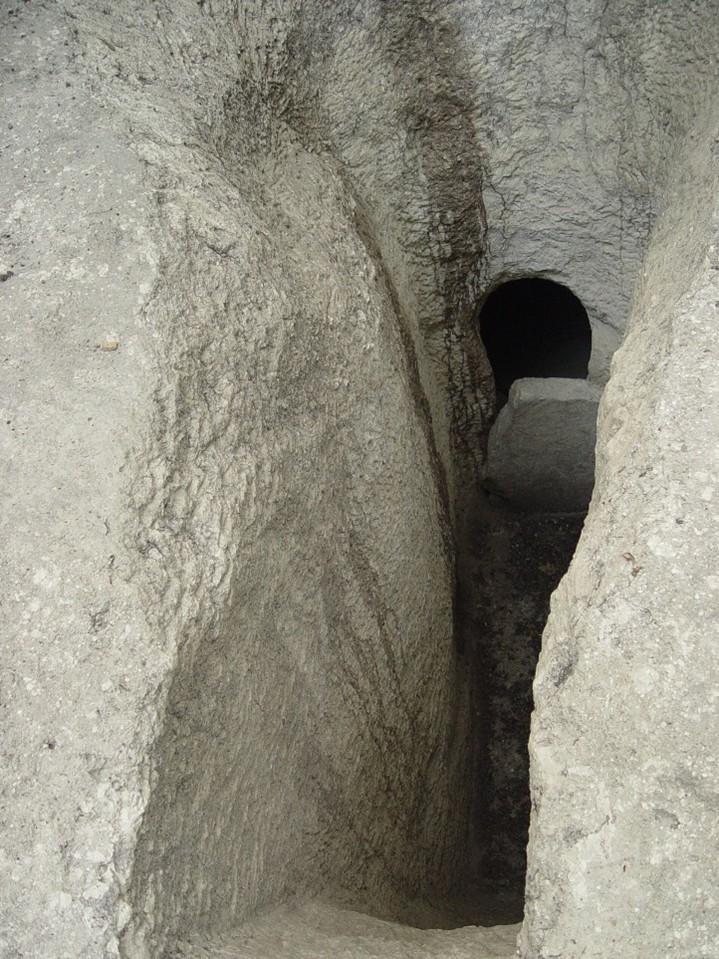
Figure 4. Tomb at Almalyk Dere in 2008. Photo by R. Schreg.
The cemetery of Almalyk-Dere
A notable archaeological site amidst the Chersonesos controversy is the Almalyk-Dere burial ground, located near the Mangup plateau. See Figure 4. The burials at Almalyk-Dere provide essential insights into the early medieval period in Crimea and help our understanding of the broader cultural transformations in the region. This site was extensively excavated from 2006 to 2009, supported by a German project at the RGZM (Römisch-Germanisches Zentralmuseum, now Leibniz-Institut für Archäologie LEIZA). Out of this, several volumes were published, detailing the finds and offering perspectives on social and environmental history (Ajbabin, Chajredinova, 2009; Aibabin, 2011; Albrecht, Daim, Herdick 2013; Bemmann et al., 2013; Schreg 2013). In Soviet times and until Ukraine's independence, excavations received support from Leningrad.
Germany's involvement aimed to provide access to resources for this research. German partners recognised that these sites were sensitive, as the Mangup region became a propaganda hotspot during the Nazi occupation of Crimea during World War II. The presence of Goths in Crimea during the Migration Period provided a welcome legitimation for German propaganda in support of the occupation. Nazi Germany planned to establish a state, ‘Gotland’, as a new homestead for Germans from Italian South Tyrol (Kunz, 2005). Soviet research condemned any Gothic study and often avoided mentioning Byzantine control, instead propagating the Alano-Gothic narrative, with the Alans recognised as one of the people of the Soviet Union (Schreg, 2020). Although Byzantine archaeology was a no-go in Soviet propaganda, it is now crucial for Putin’s ideology.
Before the occupation, research at Mangup, Almalyk-Dere, and the nearby site of Eski-Kermen was conducted by the Taurida Academy and Crimea Research Centre, both at Taurian University in Simferopol. After 2014, excavations continued under Russian management. Since then, the Almalyk-Dere site has yielded numerous artefacts. Further burials were uncovered during the 2024 campaign, revealing rich gold and silver finds. These excavations have been deemed illegal under international law due to the ongoing occupation, casting doubt on the legitimacy of the findings and employed methodologies, namely whether they align with internationally recognised standards (24tv, 4.12.2024).
Cooperating, citing, concealing, or condemning?
Ethical guidelines in archaeology prohibit participation and collaboration in cases of annexation that violate international law. Ukrainian colleagues rightly oppose the publication of results from these excavations in scientific journals. But is it justifiable to ignore and avoid citing publications appearing in Russian journals? Some of the watch projects reference Russian internet sources and appear familiar with the scientific literature but cite it selectively to avoid normalising this Russian research.
A blanket boycott or neglect of specialised publications is unlikely to further our goals, as most archaeologists recognise that cultural heritage provides immense opportunities for international understanding, despite current nationalistic historical narratives gaining traction. A rigid stance also obstructs future opportunities to integrate archaeological cultural work into any peace process.
It is essential to distinguish between each institution and individual’s goals and levels of involvement regarding the misuse of cultural heritage. Colleagues focused on rescue archaeology, with established regional activity may be viewed differently than those from Moscow or St. Petersburg. The storage of documentation and finds is also a critical factor.
The Role of UNESCO
Chersonesos has only held UNESCO World Heritage status since 2013. Their rules require the preservation of authenticity, but the site is being transformed into ‘New Chersonesos’ – a military-backed development promoting a distorted historical narrative to bolster Russia’s territorial claims. Original archaeological findings of suburban development were replaced by imaginative, representative museum buildings in a pseudo-Byzantine style. This architecture, characterised by grandeur and superficial embellishments, starkly contrasts with the modest remains of the ancient city.
The ongoing destruction raises serious concerns about the preservation of the site. Though, the UNESCO World Heritage Committee has yet to respond decisively. In a 2016 decision (UNESCO decision 2016), the Russian occupation was not mentioned. But the decision demanded all ‘parties currently associated with the state of conservation of the property refrain from any action that would cause irreversible damage to the property’. Since then, the construction of New Chersonesos has drastically changed the situation. This damage was not collateral, but a deliberate disruption of the archaeological site. Therefore, Ukraine called for UN intervention (The Art Newspaper, 2024). The ongoing transformations jeopardise the UNESCO designation, which should ideally act as a seal of quality and authenticity in cultural and historical representations. Current hesitancy raises questions about the integrity of international heritage protections in the face of imperialism and state-sponsored narratives. It is particularly troubling that past decisions have led to the withdrawal of World Heritage status under less severe conditions. The organisation must critically assess the implications of allowing the Russian narrative of Chersonesos to prevail under its auspices. Continued endorsement, even tacitly, risks legitimising a historical narrative that contradicts Crimea's diverse, multicultural heritage.
Conclusion
In light of current circumstances, UNESCO must act decisively to safeguard Chersonesos' legacy and integrity. It must consider revoking its status as a World Heritage Site. The altered landscape—with its propagandistic exhibitions—does not reflect Chersonesos’ true historical context. Instead, it presents a fabricated narrative that emphasises Russian nationalism while erasing the site's authentic cultural richness. The detrimental effects on cultural heritage from these state-sponsored projects require rigorous scrutiny and urgent action from international bodies tasked with global heritage protection. As custodians of cultural stewardship, archaeologists must insist on accuracy, integrity, and respect for the multifaceted narratives shaping our understanding of history.
Bibliography
Abramzon, M. G., Kostromichev, D. A., Tereshchenko, A. E. & Treister, M. Y. (2024). Два Комплекса III в. н. э. С Золотыми Погребальными Лицевыми Пластинами Из Некрополя Херсона. Two Third Century AD Complexes with Golden Funerary Face Plates from the Chersonesus Necropolis. Rossijskaja Archeologija, 4, 62–77. doi:10.31857/S0869606324040055.
Ajbabin, A.I. (2011), Archäologie und Geschichte der Krim in byzantinischer Zeit, Monographien des Römisch-Germanischen Zentralmuseums, Vol. 98, Verlag des Römisch-Germanischen Zentralmuseums, Mainz.
Ajbabin, A.I. and Chajredinova, Ė.A. (2009), Das Gräberfeld beim Dorf Lučistoe, Monographien des Römisch-Germanischen Zentralmuseums, Vol. 83,1, Verlag des Römisch-Germanischen Zentralmuseums, Mainz.
Albrecht, S., Daim, F. and Herdick, M. (Eds.) (2013), Die Höhensiedlungen im Bergland der Krim. Umwelt, Kulturaustausch und Transformation am Nordrand des Byzantinischen Reiches, Monographien des Römisch-Germanischen Zentralmuseums, Vol. 113, Verlag des Römisch-Germanischen Zentralmuseums, Mainz.
Bemmann, J., Schneider, K., Gercen, A., Černyš, S., Maczyńska, M., Urbaniak, A. and Freeden, U. von (2013), Die frühmittelalterlichen Gräberfelder von Adym-Čokrak, Južnyj I und Južnyj II am Fuße des Mangup, Monographien des Römisch-Germanischen Zentralmuseums, Vol. 108, Verlag des Römisch-Germanischen Zentralmuseums, Mainz.
Campfens, E., Jakubowski, A., Hausler, K. & Selter, E. (2023). Protecting cultural heritage from armed conflicts in Ukraine. March 2023. Available at: http://www.europarl.europa.eu/thinktank/en/document/IPOL_STU(2023)733120
Kappeler, A. (2019). Die Kiewer Rus: Geteilte Erinnerung in der Ukraine und in Russland. bpb.de, 9 September 2019. Available at: https://www.bpb.de/themen/europa/russland/295403/die-kiewer-rus-geteilte-erinnerung-in-der-ukraine-und-in-russland/
Klenina, O., Yashnyi, D. & Ablyalimova, E. (2024). Research on the consequences of violations of international humanitarian law in the field of protection of cultural property. Ancient City of Tauric Chersonese and Its Chora. Kyiv. Available at: https://ciss.org.ua/files/site/page_file//20250307/uqu76hiywop_rh7s8vp9vdm.pdf
Koçak Bilgin, Y. & Hazarhun, E. (2023). The Cultural Heritage Impact of the Russia-Ukrainian War. Turizm Akademik Dergisi, 10(2), 307–321.
Kowalska, S. (2017). The Protection of the Ukrainian Cultural Heritage in UNESCO Programmes. Visnyk Lvivs'koi Natsional'noi Akademii Mystetstv, 34, 192–201. Available at: http://hdl.handle.net/10593/23579
Kravchenko, E. (2024). Tauric Chersonesos is being Destroyed by the Occupying Russian Authorities. In: World Heritage Watch Report 2024, Berlin, 34–38.
Kunz, N. (2005), Die Krim unter deutscher Herrschaft (1941 - 1944): Germanisierungsutopie und Besatzungsrealität, Veröffentlichungen der Forschungsstelle Ludwigsburg der Universität Stuttgart, Vol. 5, Wiss. Buchges., Darmstadt.
Lifantii, O. (2024). Occupied Heritage in Crimea: 10 Years of Illicit Excavations. In: 30th EAA Annual Meeting, Rome, Italy 2024. Abstract Book, Rome, 433.
Lytvynenko, R. (2024). Ukraine’s Archaeological Heritage: Challenges of War. In: Lytvynenko, R. O. (ed.) The Current Russian-Ukrainian War: Socio-Historical Realities and Prospects. Proceedings of the International Conference, Vinnytsia, 15 March 2024. Konstanz, 173–182. Available at: https://rchr.org.ua/wp-content/uploads/2023/06/buklet-press-anhl.-sotssety-2.pdf.
Mokreniuk, S., Tymochko, M. & Kravchenko, E. (2021). Ukraine's Cultural Heritage in Crimea: Damage and Destruction. Kyiv.
Schreg, R. (2013), Forschungen zum Umland der frühmittelalterlichen Höhlenstädte Mangup und Eski Kermen – eine umwelthistorische Perspektive. In Albrecht, S., Daim, F. and Herdick, M. (Eds.), Die Höhensiedlungen im Bergland der Krim. Umwelt, Kulturaustausch und Transformation am Nordrand des Byzantinischen Reiches, Monographien des Römisch-Germanischen Zentralmuseums, Vol. 113, Verlag des Römisch-Germanischen Zentralmuseums, Mainz, pp. 403–445.
Schreg, R. (2020). Zwischen Nazis und Sowjets: Die Krimgoten in den 1930er und 40er Jahren. Archaeologik (20.6.2020). - https://archaeologik.blogspot.com/2020/06/zwischen-nazis-und-sowjets-die.html
Schreg, R. (2025). "Russen plündern über 100 Schätze auf der Krim" - auch aus UNESCO-Welterbe. Archaeologik (10.7.2025. - https://archaeologik.blogspot.com/2025/07/russen-plundern-uber-100-schatze-auf.html
Shydlovskyi, P., Kuijt, I., Skorokhod, V., Zotsenko, I., Ivakin, V., Donaruma, W. & Field, S. (2023). The tools of war: conflict and the destruction of Ukrainian cultural heritage. Antiquity, 97(396). doi:10.15184/aqy.2023.159.
Sidorenko, V. A. & Sedikova, L. V. (2024). Навесной замóк мастера Óмара (ýмара) Сирийца из раскопок средневекового Херсона. Padlock of the Master ’Omar (’Umar) the Syrian Excavated at Mediaeval Cherson. MAYET, 29, 192–208.
Solovyova, N., Solovyev, S., Vakhoneev, V. & Pokrovskaya, A. & Nizov, Y. (2024). The Southern Suburb of Tauric Chersonesos. Hyperboreus, 30(1), 20–44. doi:10.25990/hyperboreus.8108-1579.
Solovyova, N., (2024), Предисловие, Бюллетень Института истории материальной культуры Российской академии наук: 15: 9–10.
Vakhoneev, V. V. (2024). Фигурный сосуд из раскопок Южного пригорода Херсонеса. Figure Vessel Excavated at the Southern Suburb of Chersonese. MAYET, 29, 60–72.
Weblinks
24tv, 4.12.2024: Росія розкопала стародавній некрополь у Криму й привласнює колекцію золотих скарбів: https://24tv.ua/tech/starodavni-pohovannya-krimu-zberigayut-zoloti-sribni-prikrasi_n2699659 (last access 8 October 2025)
“The Ancient City of Tauric Chersonese and its Chora”: https://chersonese.spatialtech.info/ (last access 30 September 2025)
CISS map: https://ciss.org.ua/en/map.html (last access 30 September 2025)
CISS Chersonesos: https://ciss.org.ua/en/sk_page.html?object_code=8e3aa4d2092c1821d320e780bbe3e2eb (last access 30 September 2025)
For Post 15.2.2024: Part of “Chersonoses of Tauric” in Sevastopol will be closed: https://sevastopol.su/news/chast-hersonesa-tavricheskogo-v-sevastopole-stanet-zakrytoy (last access 30 September 2025)
Institute for the History of Material Culture (2024). Южный пригород Древнего Херсонеса. Центр Спасательной Археологии Института Истории Материальной Культуры Российской Академии Наук. Available at: https://rac.archeo.ru/projects/chersonesus/ (last access 30 September 2025)
My History Archiv: http://фондмояистория.рф/proekty/infotsentr/ (last access 30 September 2025)
My History (2024): http://фондмояистория.рф/proekty/muzejno-xramovyij-kompleks-%C2%ABnovyij-xersones%C2%BB/ (last access 30 September 2025)
Novaya Gazeta Europe (29.3.2023). Oleg Belousov, archaeologist with disability, sentenced to 5.5 years amid ‘fakes about military’ charges. Available at: https://novayagazeta.eu/articles/2023/03/29/oleg-belousov-archaeologist-with-disability-sentenced-to-5-5-years-amid-fakes-about-military-charges-en-news (last access 30 September 2025)
Occupied Media (31.5.2025): Putin’s Disneyland: why Russia built the “New Chersonese” in Sevastopol. Available at: https://occupied.media/en/analytics/putins-disneyland-why-russia-built-the-new-chersonese-in-sevastopol/ (last access 30 September 2025)
Regional Center for Human Rights (2024). Russians destroyed Tauric Chersonesos, a UNESCO World Heritage Site. Available at: https://rchr.org.ua/en/publications/russians-destroyed-tauric-chersonesos-a-unesco-world-heritage-site/ (last access 30 September 2025)
Regional Center for Human Rights (2025). Russia intensifies illegal archaeological excavations in the occupied territories of Ukraine. Available at: https://rchr.org.ua/en/publications/russia-intensifies-illegal-archaeological-excavations-in-the-occupied-territories-of-ukraine/ (last access 30 September 2025)
The Art Newspaper (9.8.2024). Ukraine calls for UN to intervene after ancient Crimean heritage site transformed into cultural complex. Available at: https://www.theartnewspaper.com/2024/08/09/ukraine-calls-for-un-to-intervene-after-ancient-crimean-heritage-site-transformed-into-cultural-complex (last access 30 September 2025)
Tymchuk (30.6.2017). Украина готовит уголовные дела против российских археологов, проводящих раскопки в оккупированном Крыму (Ukraine is preparing criminal cases against Russian archaeologists conducting excavations in occupied Crimea). Available at: https://censor.net.ua/news/446071/ukraina_gotovit_ugolovnye_dela_protiv_rossiyiskih_arheologov_provodyaschih_raskopki_v_okkupirovannom (last access 30 September 2025)
Ukraina incognita (4.12.2024): Російські гробокопачі вчергове привласнили скарби Криму (Russian tomb diggers once again misappropriated the treasures of Crimea). – Available at: https://ukrainaincognita.com/rosiyski-hrobokopachi-vcherhove-pryvlasnyly-skarby-krymu-foto
UNESCO World Heritage Chersonesos page: https://whc.unesco.org/en/list/1411/ (last access 30 September 2025)
UNESCO decision 2013: https://whc.unesco.org/uploads/nominations/1411.pdf (last access 30 September 2025)
UNESCO decision 2016: https://whc.unesco.org/en/decisions/6727 (last access 30 September 2025)
Virtual Museum of Russian Aggression (2015). Russia is destroying a monument of world significance. Illegal excavations and transportation of valuables from Chersonese to Russia. Available at: https://rusaggression.gov.ua/en/illegal-excavations-and-transportation-of-valuables-from-chersonese-to-russia-9e4dbdd9032a0be5a4d849d7f411b6a3.html (last access 30 September 2025)
War Sanctions Stolen heritage; https://war-sanctions.gur.gov.ua/en/stolen (last access 1 October 2025)
War Sanctions Stealers of Heritage: https://war-sanctions.gur.gov.ua/en/stolen/persons (last access 1 October 2025)
Go back to top