Jean-Luc Renaud1 & Samantha S. Reiter2
1 Chef in training, Hotel and Restaurant Skole, Copenhagen
2 TEA Editor
While it is a well-established fact in museum circles that taste and smell are huge triggers of emotion and memory and can greatly enhance visitor experiences (Jenner, 2011; Verbeek, Leemans and Fleming, 2022; Talbot, 2025), it remains uncommon to see historians reach out and transform modern food trends by means of inspiration from the past. Nevertheless, this is exactly what has happened in eastern France. Just over a decade ago, one of our colleagues visited the town of Langres in the region of the Upper Marne. See Figure 5. Though Langres is known as the home of Denis Diderot, author of France’s first encyclopedia (Dupuy, 1963), the historian was visiting the region for another reason entirely; as a specialist in medieval food, he was on a quest to educate his palate! His stop in Langres was centered around his search for a local medieval specialty known as the ‘ouyette de Langres’, a pastry stuffed with a ragout of goose meat simmered with shallots, parsley, nutmeg, four spice and white wine and baked until golden. See Figure 6.
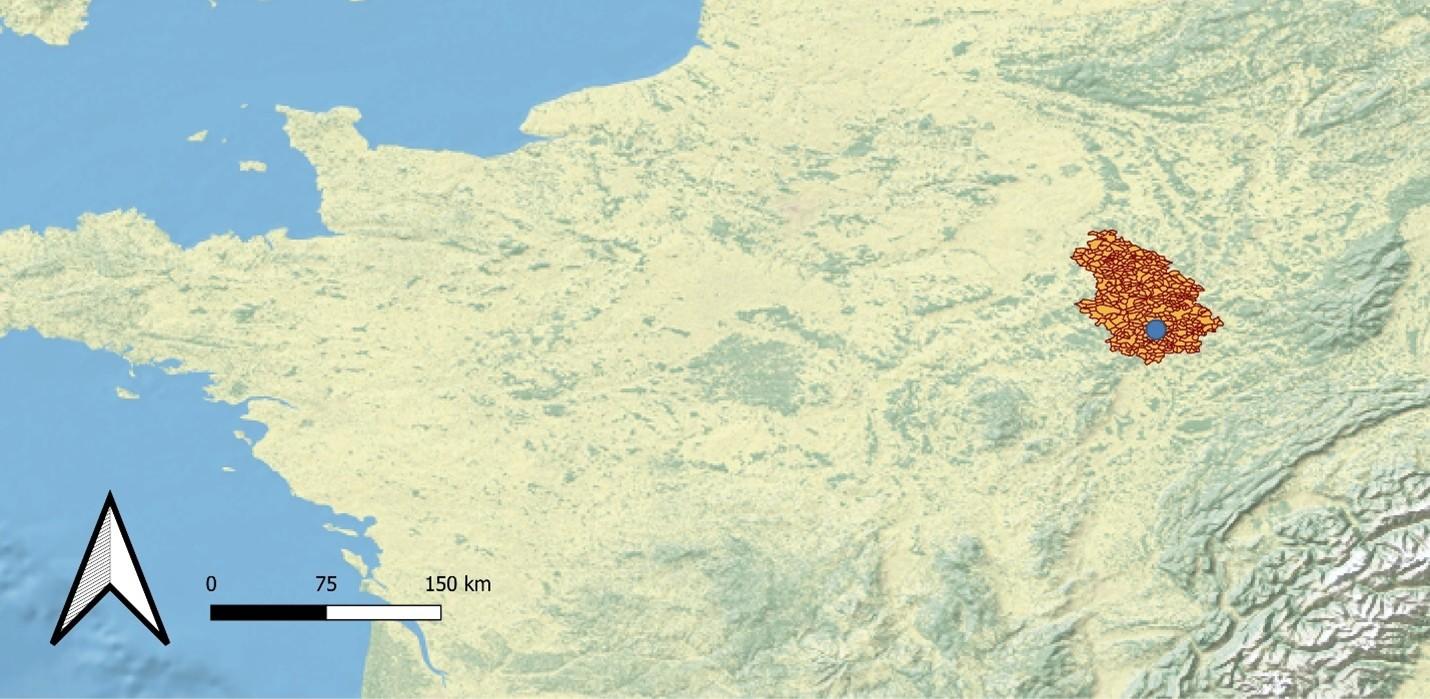
Figure 5. The blue dot shows the location of the medieval walled city of Langres in France’s Upper Marne region (yellow, with red canton divisions).
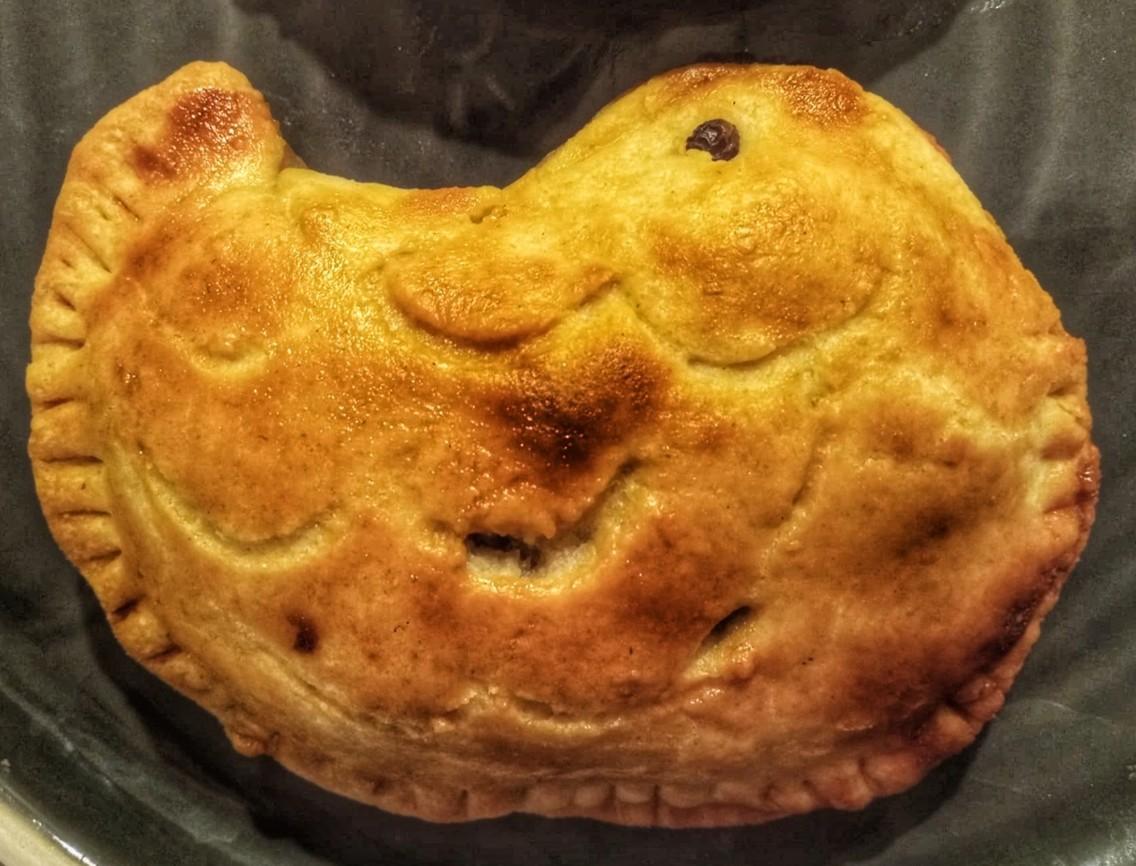
Figure 6. Ouyette goose meat stuffed pastry with peppercorn eye. See the full recipe below!
After canvassing menus throughout the walled city of Langres, our colleague had still not discovered a single listing for ouyettes. Disheartened, he sat down to a meal at one of Langres’ finest tables to console himself. At his request, his meal was followed by a conversation with L’Atelier Lingon’s head chef, Daniel Perrin. He regaled Perrin with the trials and tribulations of his quest to find the elusive ouyette. Inspired, the chef, in turn, contacted Georges Viard of Langres’ Historical and Archaeological Society and the hunt was joined. These three brave culinary detectives scanned archives, historical documents and the handwritten recipe books of the cooks and farmwives of the Upper Marne in their search to bring back the ouyette (Corte, 2023). The end result is that the delicious dish can now be found not only on the menus touristiques of Langres, but also on various internet recipe archive, such as Recettes de Cuisine, Recoin and Cuizineaz.
Etymologically, the word ‘ouyette’ is almost certainly an adaptation of the local dialect, likely stemming originally from the Latin word ‘auca’ or ‘goose’ which is known in French still today as ‘oie’ (Lindsay, 1918). The accompanying diminuative (‘-ette’) at the end of the word suggests that ouyette was a local word meaning ‘little goose’.
In the Middle Ages, Langres was known for its goose farms. Clavel’s 2001 zooarchaeological survey of the region between the 13th and 17th centuries demonstrated old culinary trends clearly, showing a preference for meats (like pork) for households associated with the upmost social echelons and a more common preference for what was known as ‘salaisons’ (or salted or cured meats, such as confits) for the more rural areas. This included the tables of the landed gentry (Clavel, 2001, p. 189).
During the Middle Ages, the ouyette was probably a more rural specialty. Although the addition of expensive ingredients like nutmeg and four spice likely designated it as a dish for special occasions and for the plates of local lesser aristocrats (Balard, 2023). Four spice (‘quatre épices’, also known as ‘poudre fort’, or ‘strong powder’) is common in France as well in some Middle Eastern kitchens. Importantly, it is distinct from allspice (which is the dried berry of the Pimenta dioica tree), as it typically includes cinnamon, nutmeg, cloves and pepper, though other ingredients like laurel and marjoram are sometimes included as well (Montagné, 1961, p. 926).
At the time of this writing, Perrin’s resurrected ouyette has pride of place on L’Atelier Lignon’s menu, though his modern adaptation includes some things that were likely not to have been present in the original. For example, Perrin’s version is served accompanied by sautéed potatoes flavoured with a touch of maple syrup. As he explains, this is an homage to Jeanne Mance (one of Langres’ 17th c. inhabitants who, after serving as a nurse during the 30 Years War between France and Germany, travelled to the New World and is considered one of the founders of Montreal). But of course, it is unlikely that medieval Haut-marnais had access to either potatoes or maple syrup. It was not until Parmentier’s determined efforts in the latter half of the 18th century that the cultivation and consumption of potatoes became widespread in French territories (Kyle and Shampo, 1989). In fact, France had actually banned the cultivation of the potato in 1748 due to fears that they aided in the spread of leprosy (Richeson, 2025)!
A recipe for the ouyette de Langres that Perrin provided to the Journal de l’Haute Marne in 2023 calls for the use of either pâte feuilletée (puff pastry) or pâte brisée (shortcrust pastry) for the pastry wrapping. Historically speaking, both puff pastry and shortcrust pastry would have been possible candidates for the original Medieval ouyette. Meat pies were quite common in the Middle Ages, as the dough (which was often in poorer contexts nothing more than a simple mixture of flour and water) served as both container and cooking vessel. It also aided in the preservation of the contents of the pie, by virtue of helping to curtail air contact (Clarkson, 2009, pp. 4–5). While the wealthy would not have eaten the crust of such pies at all, poorer individuals would have eaten every morsel of the crust – referred to rather disconcertingly in English as a ‘coffin’ or ‘coffyn’ (Cohen, 2018), likely originating from the old French word ‘cofin’ from the Greek kóphinos (κόφινος) or ‘basket’. Indeed, in Medieval ‘upper crust’ circles, crust itself was considered more a form of sculpture than of actual food. These doughy containers were often referred to as ‘sotelties’ (think ‘subtleties’) or ‘bakemetes’ and were intended to be both pleasing to the eye and to conceal what was contained inside (Hackwood, 1911, p. 108). The common English nursery rhyme of “four-and-twenty blackbirds baked in a pie” is likely a reference to one such baked pièce de resistance. Perhaps, the ouyette was another? Certainly in name, contents and form, it may very well have not only contained spiced goose meat, but the outer pastry may also have been prepared in such a way so as to appear as a golden goose as well!
The method of preparation for the ouyette—stewing meat, finishing with white wine and then enveloping the resulting mix into a crisp pastry crust—creates what is generically referred to as a ‘tourte’. Tourtes are a specialty of eastern France, particularly of the region of Lorraine (of which Langres is a part). Further proof of the original date and popularity of this cooking method during Medieval times comes from the Mazarine edition of Le Viandier, a 14th century haute cuisine cookbook by Guillaume de Tirel, which contains a recipe for a ‘tourte lorrain’ and which references this very method (Taillevent, 1892, pp. 41–42). Below, we provide a version of the recipe suitable for the modern kitchen which nevertheless respects the origins and spirit of the traditional ouyette. We believe it is a dish that would be right at home on any holiday table! Bon appetit!
Recipe for Ouyettes de Langres
Serves 4
500 g shortcrust pastry, rolled flat (if making homemade, we recommend this recipe by P. Etchebest) Note that you will want a little extra if you plan to shape the ouyette into a waterbird!
2-3 Small apples diced into bite size pieces and tossed in lemon juice (to keep them from browning and to add a little acidity)
1.3 kg canned duck or goose confit, meat separated from the bones, skin and fat in the confit. Reserve the fat.
8 sprigs flat-leaf parsley
10 cl milk
A handful of flour
2 shallots
2 onions
10 cl dry white wine
A dash of gin
Four Spice (quatre épices)*
Nutmeg
Salt
Pepper
1) Pre heat the oven 180C.
2) Melt 1 tablespoon of goose/duck fat in a large saucepan. Add the chopped onion. Cook, stirring occasionally until the onions are translucent, aromatic and slightly golden (5 mins). Add the sliced apples and sauté a further 10 minutes over low heat.
3) Dice the goose or duck meat into piece approximately the size of your fingernail. Place into the saucepan with the chopped parsley, then add the white wine. Allow this to cook off, then add the gin. Add salt, pepper, a good pinch of nutmeg, and four spice/quatre épices and allow to come together, stirring occasionally for about five minutes. The stuffing should not be too wet. If it is, drain the mixture, carefully preserving the liquid and reduce the liquid further until thickened. You can add a little bit of flour and butter or goose/duck fat if this is proving difficult. The reduced and thickened liquid can then be recombined with the ouyette stuffing, but reduce separately in this case so as not to dry out the meat.
4) Allow the mixture to cool thoroughly. It can be put in the refrigerator at this point for up to two days before the next step. (NB: If you do not allow the mixture to cool entirely, it will be very difficult to work with the pastry to form the turnovers or goose/duck shapes!)
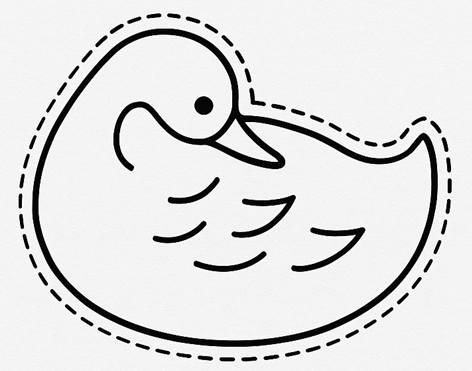
Figure 7. Ouyette stencil.
5) Roll out the pastry on a floured work surface. Cut into 12-10 cm rounds for turnovers or be daring and cut out paired rounds of the ouyette duck shape via our stencil. See Figure 7.
6) Fill with 3-4 spoonfuls of stuffing, paint the edges with an egg wash to seal and the crimp the edges. Turnovers should have a small hole poked in the middle to release steam. Waterbird shapes should be scored decoratively following the pattern. Include a peppercorn ‘eye’ if desired. See Figure 8.
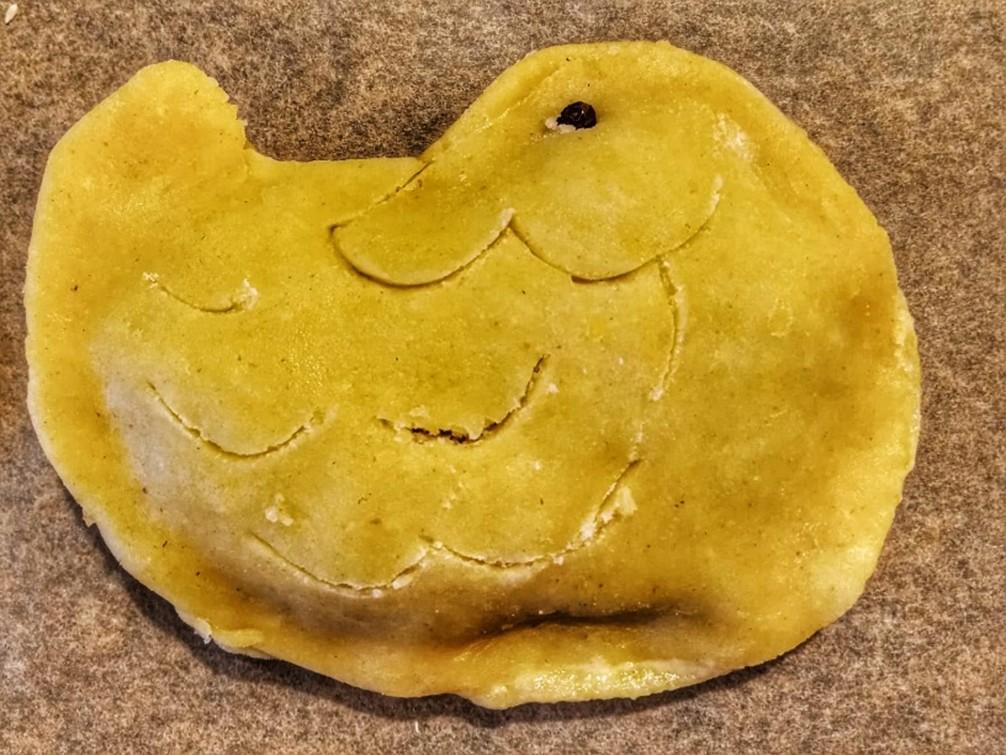
Figure 8. Suggested score markings for the ouyette.
7) Place on a parchment-paper lined baking sheet, brush with milk and bake for 20 minutes or until golden and delicious. See Figure 9.
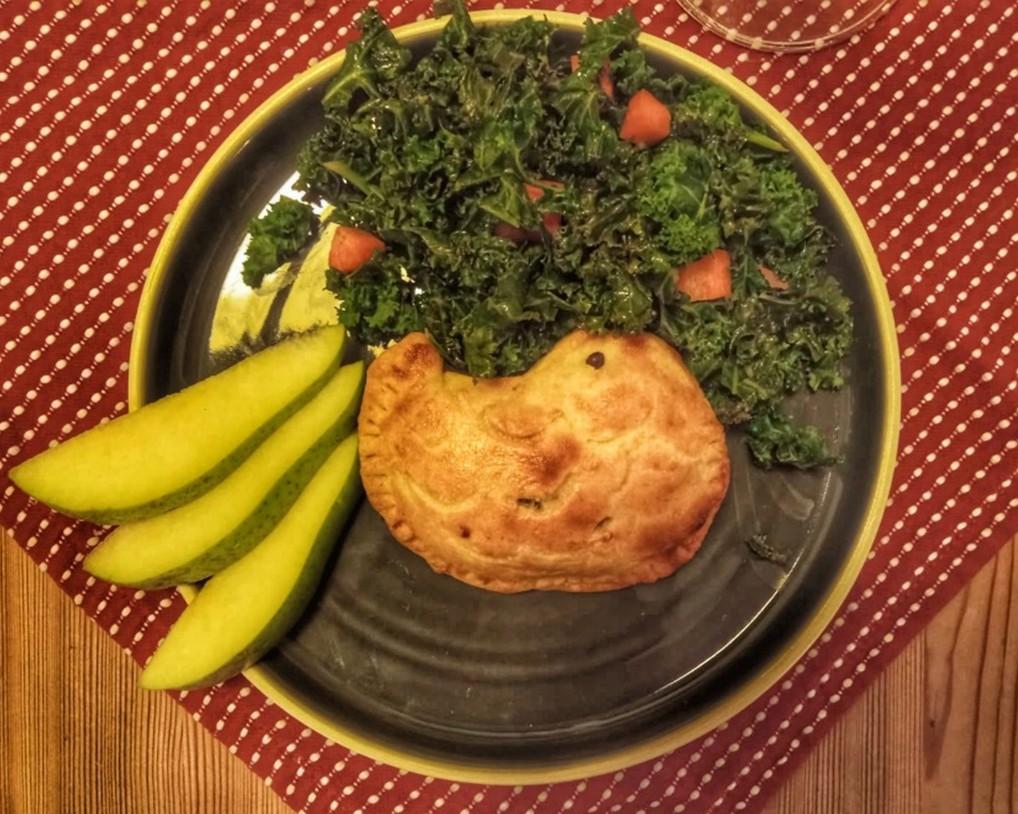
Figure 9. The ouyette—a taste of the past!
*If quatre épices is difficult to obtain, you can make your own or substitute with allspice, as it has a similar flavour profile.
Bibliography
Balard, M. (2023) Histoire des épices au Moyen-âge. Paris: Perrin.
Brown, C.R. (1993) “Origin and history of the potato,” American Potato Journal, 70(5), pp. 363–373. Available at: https://doi.org/10.1007/BF02849117.
Clarkson, J. (2009) Pie: A Global History. Reaktion Books.
Clavel, B. (2001) “L’animal dans l’alimentation médiévale et moderne en France du Nord (XIIIe - XVIIe siècles),” Revue archéologique de Picardie, 19, pp. 9–204.
Cohen, T. (2018) “The History of Meat Pies,” Thyme Machine Cuisine. Available at: https://www.thymemachinecuisine.com/single-post/chicken-bacon-and-fennel-pie (Accessed: October 9, 2025).
Corte, N. (2023) “L’ouyette de Langres, ou le Moyen Age revisité par L’Atelier Lingon,” Journal de L’Haute Marne, 3 February. Available at: https://jhm.fr/louyette-de-langres-ou-le-moyen-age-revisite-par-latelier-lingon/ (Accessed: October 9, 2025).
Dupuy, A. (1963) “Diderot et Langres,” Europe, 41(405), p. 17.
Hackwood, F.W. (1911) Good Cheer: The Romance of Food and Feasting. Sturgis & Walton.
Henshaw, H.W. (1890) “Indian Origin of Maple Sugar,” American Anthropologist, 3(4), pp. 341–352.
Jenner, M.S.R. (2011) “Follow Your Nose? Smell, Smelling, and Their Histories,” The American Historical Review, 116(2), pp. 335–351. Available at: https://doi.org/10.1086/ahr.116.2.335.
Kyle, R.A. and Shampo, M.A. (1989) “Antoine-Augustin Parmentier—;Champion of the Potato,” Mayo Clinic Proceedings, 64(9), p. 1133. Available at: https://doi.org/10.1016/S0025-6196(12)64982-9.
Lindsay, W.M. (1918) “Bird names in Latin Glossaries,” Classical Philology, 13(1), pp. 1–22.
Montagné, P. (1961) Larousse Gastronomique: The Encyclopedia of Food, Wine & Cookery. Crown Publishers.
Richeson, L.P. (2025) “How the potato went from banned to beloved,” National Geographic, 3 June. Available at: https://www.nationalgeographic.com/history/article/potato-history-france-western-europe (Accessed: October 9, 2025).
Robinson, J. (1994) The Oxford Companion to Win. 3rd ed. Oxford Universitry Press. Available at: https://www.amazon.com/Oxford-Companion-Wine-Jancis-Robinson/dp/0198609906 (Accessed: October 9, 2025).
Taillevent (1892) Le Viandier de Guillaume Tirel dit Taillevant...: 1326-1395, publ. sur le manuscrit de la Bibliothèque Nationale avec les variantes des mss. de la Bibliothèque Mazarine et des archives de la Manche. Techener.
Talbot, M. (2025) Remembrance of Scents Past, The New Yorker. Available at: https://www.newyorker.com/culture/onward-and-upward-with-the-arts/remembrance-of-scents-past (Accessed: October 9, 2025).
Verbeek, C., Leemans, I. and Fleming, B. (2022) “How can scents enhance the impact of guided museum tours? Towards an impact approach for olfactory museology,” The Senses and Society, 17(3), pp. 315–342. Available at: https://doi.org/10.1080/17458927.2022.2142012.
Go back to top