Ashleigh Airey & Matilda Siebrecht
Archaeology Podcast Network
Once upon a time, two people who shared a background in archaeology and a love of fantasy fiction met online. You can probably guess what happened next. That’s right—they decided to start a podcast!
We are both archaeologists with a particular focus on material culture. Ash is an experienced field archaeologist and illustrator. Tilly is a specialist in post-excavation artefact analysis. What drew this field mouse and lab rat together was not just our love of archaeology, but our passion for storytelling. Ash is the founder and manager of AshWood Candles, a small business that focuses on exploring archaeological sites through smell. Tilly is the founder of The Archaeologist’s Teacup, where she uses her journalistic experience to communicate archaeological information to the public in an accessible and engaging way. After collaborating in several online projects together, we found ourselves one day in a particularly silly but intriguing discussion (more on that later…) and the result was a particularly niche podcast. How niche, you ask?
And My Trowel podcast engages with archaeological method and theory through the framework of fantasy worldbuilding. In each episode, we attempt to complete a quest—either with or without an expert guest to help us—via the premise that we are two archaeologists living and working in a fantasy world. Archaeological concepts are explained through analogies with fantasy fiction, and fantasy tropes and subjects are discussed through an archaeological lens. The podcast has been running for two years now, and as of TEA 85’s publication, we will be coming up to our 55th episode, all hosted through the Archaeology Podcast Network (APN).
Founded in 2014, the APN is a network of archaeologically-focused podcast shows which aim to provide free and professional content to all those interested in the broader field of archaeology. The network currently includes 17 different shows that focus on i.a., discussions of neurodiversity in the past (ADHD-BCE), addressing pseudo-archaeological claims (Pseudo-Archaeology), exploring mortuary archaeology (The Past Macabre), sharing recent news stories (The Archaeology Show), highlighting the voices of minority groups (Heritage Voices), and more.
The benefits of podcasting as a form of archaeological communication have been widely published elsewhere. For example, by APN founder Tristan Boyle (Boyle 2017), and by Matilda Siebrecht, in her presentation at the 2024 EAA AM in Rome. Thus, we will not provide a deeper discussion of that topic here. However, we do wish to mention one particular advantage of podcasts as a format: their discoverability. Although many listeners may subscribe to a specific website or server dedicated to their favourite show, the majority of podcast audiences get their daily fix through streaming platforms, such as Spotify or Apple Podcasts. Adding one’s own content to such a vast abyss of pre-existing entertainment may seem daunting, but it provides the perfect opportunity to find a niche. By tapping into different areas of interest, it is possible to reach an audience who would otherwise have been completely overlooked, and who consequently would never have found your show but for a critical keyword search or link in the ‘suggested listening’ section of an app.
One example of this is the very successful Ethnocynology podcast, which looks at the archaeology of dogs. By focusing on a particular specialist subject, host David Ian Howe managed to find the perfect sweet spot between those interested in archaeology and those interested in dogs. People might join the show based on their search for dogs, but they stay—at least in part—for the archaeology, and vice versa. We decided to try something similar. But rather than focusing on man’s best friend, we turned to our bookshelves for inspiration.
And My Trowel was born from a very silly conversation in which we imagined ourselves as archaeologists in a fantasy universe. What started as a bit of a joke became a serious topic of discussion. How would you deal with the burial of an actual vampire? What effect would magic have on the microwear analysis of an object? Would an interview with a ghost count as ethnographic fieldwork? We soon realised that these questions were not only fun thought experiments, but also allowed us to really explore complex archaeological concepts in a way that was much more accessible and approachable: by means of analogy with fictional fantasy worlds.
In order to engage with our new idea as deeply as possible, we decided to take it one step further and fully immerse ourselves in the hypothetical scenario through the form of role play. Role Playing Games (RPG) are a popular form of entertainment that started in the mid-late 1970s with pen-and-paper RPGs like the ubiquitous Dungeons & Dragons (1974), Tunnels and Trolls (1974) or Traveller (1977) and soon developed into a small branch of computer games that were played on PLATO and Unix systems (Tran, 2023). RPGs can be online, as well, as known by games such as Final Fantasy, Baldur’s Gate, or The Elder Scrolls, or in-person through formats such as the aforementioned Dungeons & Dragons. Although there are various elements of RPG (including levels and fighting strength and rules of engagement), the primary format of all RPGs is based on world-building. Players are presented with a scenario and must use the information with which they are provided to develop their understanding of a new world, thereby propelling their character through the story.
Such an approach offers many parallels with archaeology. After all, when we are attempting to interpret the activities at a prehistoric settlement site, are we not also doing some form of world-building of our own? Admittedly, archaeological world building is based on physical, dirt-covered objects and muddy post-holes rather than pixelated information boxes or pre-printed scenarios. Nevertheless, the general concept and the way that we apply it is fairly comparable, and has been widely investigated in studies of archaeological theory and approach (cf. Shanks 2020). This comparison may also explain why RPG is such a popular pastime amongst those involved in the study of archaeology, and also why there is such a large overlap between the love of archaeology and the love of fantasy, where worldbuilding plays such an essential part of the genre.
Following this train of thought, we decided to explore the idea to its full potential, and see just how far we could push this combination of archaeology, fantasy, and RPG through the format of a podcast. Our aim with And My Trowel was two-fold. On the one hand, we wanted to provide a bit of light-hearted entertainment for our archaeological colleagues, and provide a space for ideas and theories to be explored in a more alternative way. On the other hand, we aimed to translate the often complex methods and themes of archaeological research into a format that was accessible and understandable to those outside the field. See Figure 2.
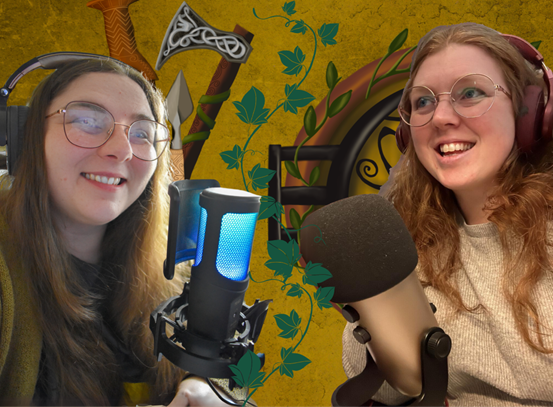
Figure 2. Ash and Tilly live in different time zones, so their workplace is whatever fantasy world they discuss on the podcast!
Does it work?
In short, yes, we think it does. However, as with all communication platforms, it is important to critically evaluate success also in terms of archaeological dissemination. Assessing the success of this format is difficult, but we can split the feedback into qualitative and quantitative data. As of May 2025, we had 10,000 downloads across a wide range of players and platforms, with an audience spread across all continents apart from Antarctica (apparently the penguins aren’t so keen on fantasy fiction…). In terms of reviews, the data pool is admittedly limited. Nevertheless, all reviews left across the various podcasting platforms where the show is available are consistently 5 stars, which strongly suggests a high level of satisfaction from our audience. Feedback that we have received from both guests and listeners on a personal level has always been positive. We are particularly gratified when eminent scholars respond to our tentative guest queries with enthusiastic excitement.
The audio format of a podcast encourages imagination, as no visual stimuli are provided to the audience and so we have full creative control over the extravagance and content of each episodic quest. In this way, the sky really is the limit. We are not restricted in the fantastical content that we explore through the lens of archaeology, and vice versa. This allows us to engage with an extremely wide variety of topics, from broader theories such as an exploration of processual versus post-processual thinking (carried out through the metaphor of duelling wizards), to specific methods such as the steps of ancient art restoration (as discussed through the example of how to conserve the picture of Dorian Gray from Oscar Wilde’s eponymous book).
Ideas for episodes are prompted either by particular archaeological concepts that we want to share, or are inspired by an example read about in our latest fantasy novel. The episodes themselves centre around a particular scenario or quest, which we must explore through a deep dive into a relevant archaeological link, sometimes joined by an expert guest. In all cases, we make sure to conduct extensive background research to ensure that the archaeological information we are sharing is indeed correct. We also make sure to provide links in the show notes to all references mentioned throughout the episode. Through this format, we hope to keep the episodes fun and engaging, but also ensure that the content is educational and accurate.
Based on the audience analytics, reviews, and unofficial feedback, it therefore seems that this format of combining fantasy RPG storytelling and podcasting is an extremely beneficial format for archaeological dissemination. In addition, our personal experiences of hosting And My Trowel have been incredibly positive. We do not receive any kind of monetary compensation for our work, and yet we are happy to spend several days creating a fictitious excavation report (see below), and dedicate several hours a month to sourcing guests, researching archaeological theory, and recording episodes. In other words, we have a lot of fun and have managed to create a form of archaeological dissemination that feels more like a hobby than a scientific requirement. By combining two kinds of worldbuilding—both fantasy RPG and archaeological interpretation—we can use storytelling to encourage our listeners both in and out of the field to engage with the past in a unique and hopefully fun way.
Excavations at Weathertop
As a final flourish to the end of this article, we wanted to share a preview of two of our episodes, in which we considered how we would undertake an archaeological excavation of the site of Weathertop in J. R. R. Tolkien’s Middle Earth. Our approach was the same as in all other episodes. We looked into the background of the fantasy universe and found as much information as possible about the site in question (luckily for us, Tolkien provided extensive references regarding his worldbuilding of Middle Earth, so sources are never scarce when exploring this particular universe). We then proceeded to consider the different stages involved in excavating the site, what methods and approaches could be applied, how we would organise the practical aspects, and what we would expect to find based on our existing understanding of the ‘archaeology’ of the area. See Figure 3.
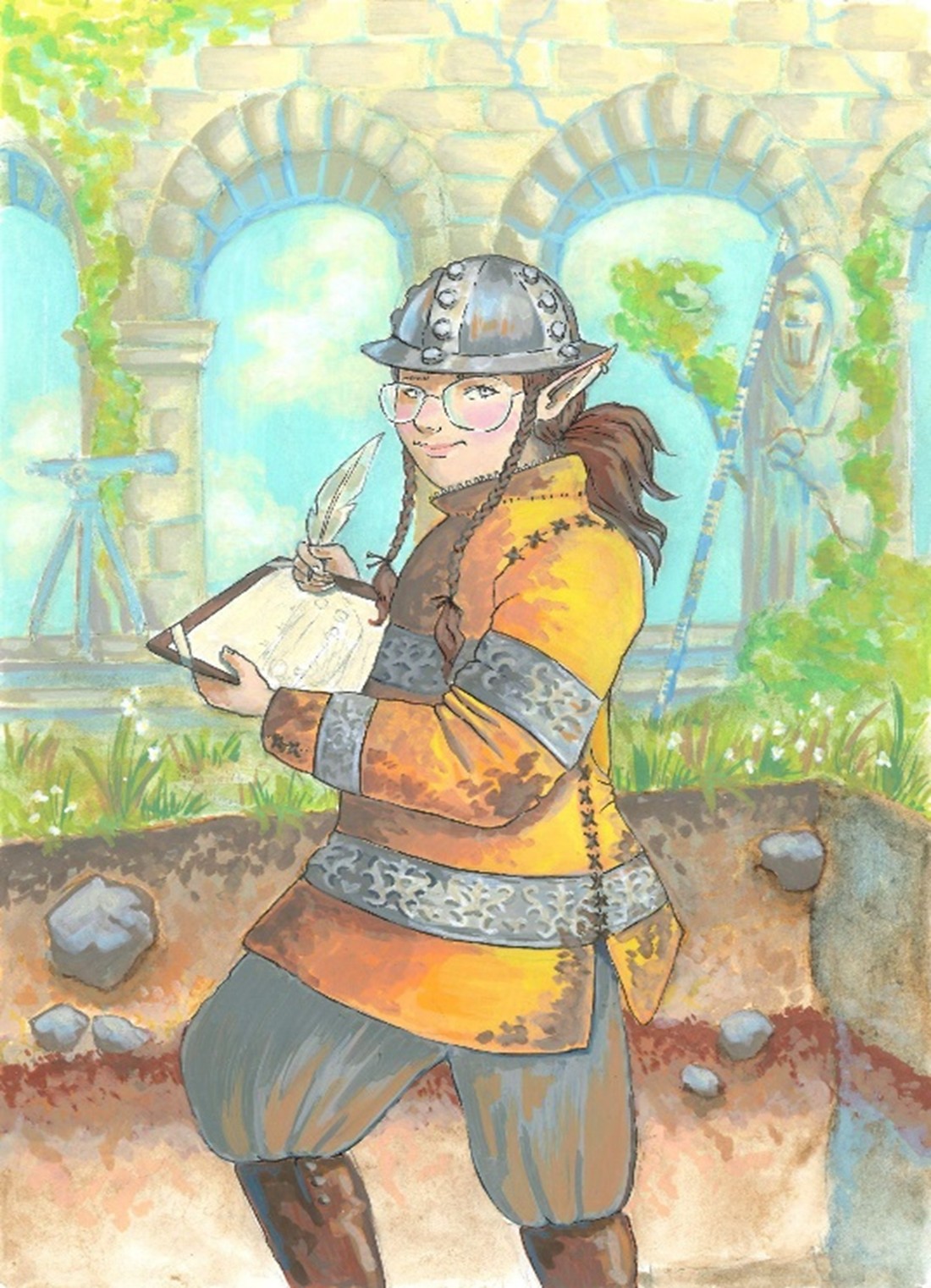
Figure 3. Ash as her And My Trowel character digging at Weathertop. Illustration by Keshia Akkermans.
The results are not only two of our personal favourite episodes, but we also decided to take the RPG format one step further and actually create a complete excavation report of Weathertop based on the hypothetical scenario as described. The report is around 40 pages long, and includes a detailed interpretation of the various occupational layers and post-excavation analysis, as well as a complete finds and features list. Was this a lot of extra work? Yes, it was. Was it necessary? Probably not. But it highlights the real enjoyment and passion that has been fostered through the continual development of the And My Trowel podcast, which we believe is in part attributed to the particular format that we have chosen.
Listen now!
Excavations of Weathertop: Investigating the Pre- and Post-Númenórean Occupation of Amon Sûl in the Third Age – Ep 41
Post Excavations of Weathertop: Investigating the Pre- and Post-Númenórean Occupation of Amon Sûl in the Third Age – Ep 42
Bibliography
Go back to top