2023 TEA Photo Contest Winners
The EAA congratulates the winnders of the 2023 TEA Photo Contest: "Out of the comfort zone: Fieldwork in perspective": Malene R. Beck, Alicia Hernandez-Tortoles and Micaela Sinibaldi.
Malene R. Beck: Submission 109
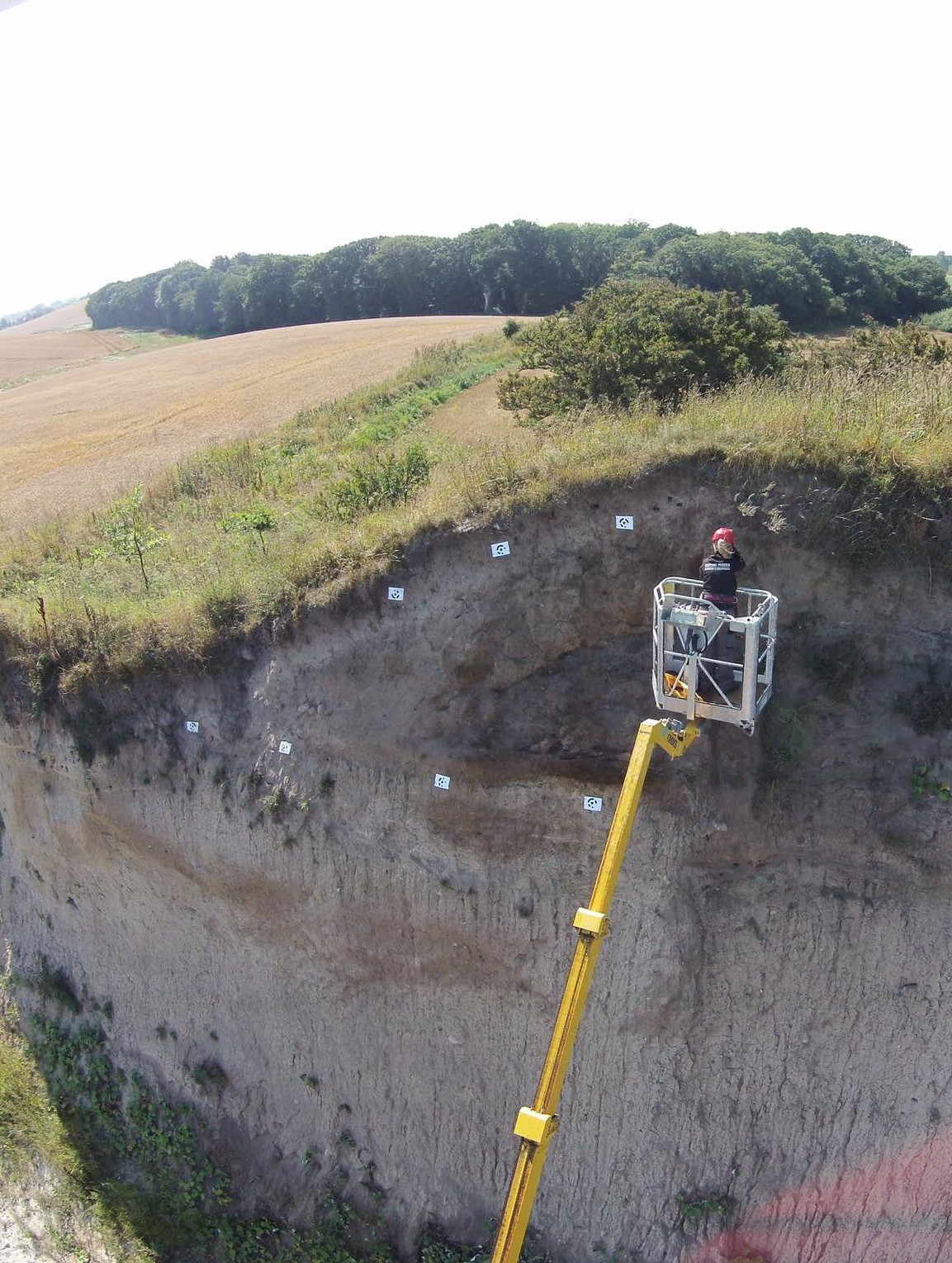
Being uncomfortable with moving heights, the investigation of a Bronze Age barrow threatened by erosion, definitely brought me out of my comfort zone.
The round barrow is situated in the beautiful countryside on the east coast of Northeast Funen (Hindsholm), Denmark. Hovering on a brink 12 meters above sea level it is highly exposed to erosion caused by wind, rain and sea – and even more so in the future because of climate changes. The remaining parts of the monument will presumably disappear into the sea before the end of this century.
In 2015 pieces of a bronze sword was found on the beach below the barrow. This instigated a more thorough investigation and registration of the monument in 2016. The investigation was financially supported by the Danish Agency for Culture and Palaces as part of their focus on the increasing number of scheduled sites and monuments threatened by erosion. Because the barrow was scheduled we decided not to excavate and thereby destroy the remaining part, as it still holds a prominent and very visible position in the surrounding agricultural and coastal landscape. Instead we took advantage of the possibilities the erosion had left us. By 2016 approximately half of the barrow had disappeared in to the sea, and this in fact created a natural profile right through the center of it. Based on the results from recent excavations of a large bronze age barrow showing complex building sequences (The Skelhøj Project) our aim was to establish, how this more regular sized barrow of 20-22 meters in diameter was constructed, and to recreate the Bronze Age landscape using pollen and macrofossil analyses.
The picture shows me in the limited space of the lift basket, cleaning the barrow profile. I prefer being on firm ground, so the trip up in the lift, as well as the cleaning task, making the lift move up and down 12 to 16 meters above ground, was definitely challenging. We cleaned the profile in two meter broad sections and made photogrammetric registration before moving the lift repeatedly. This enabled us to register the entire barrow profile, showing at least three burial phases and demonstrating the use of wet turfs and turfs from areas that had already been de-turfed once. Leaving the comfort zone brought new perspectives on bronze age barrow construction – but please don’t ask me to go up there again!
Alicia Hernandez-Tortoles: Submission 102
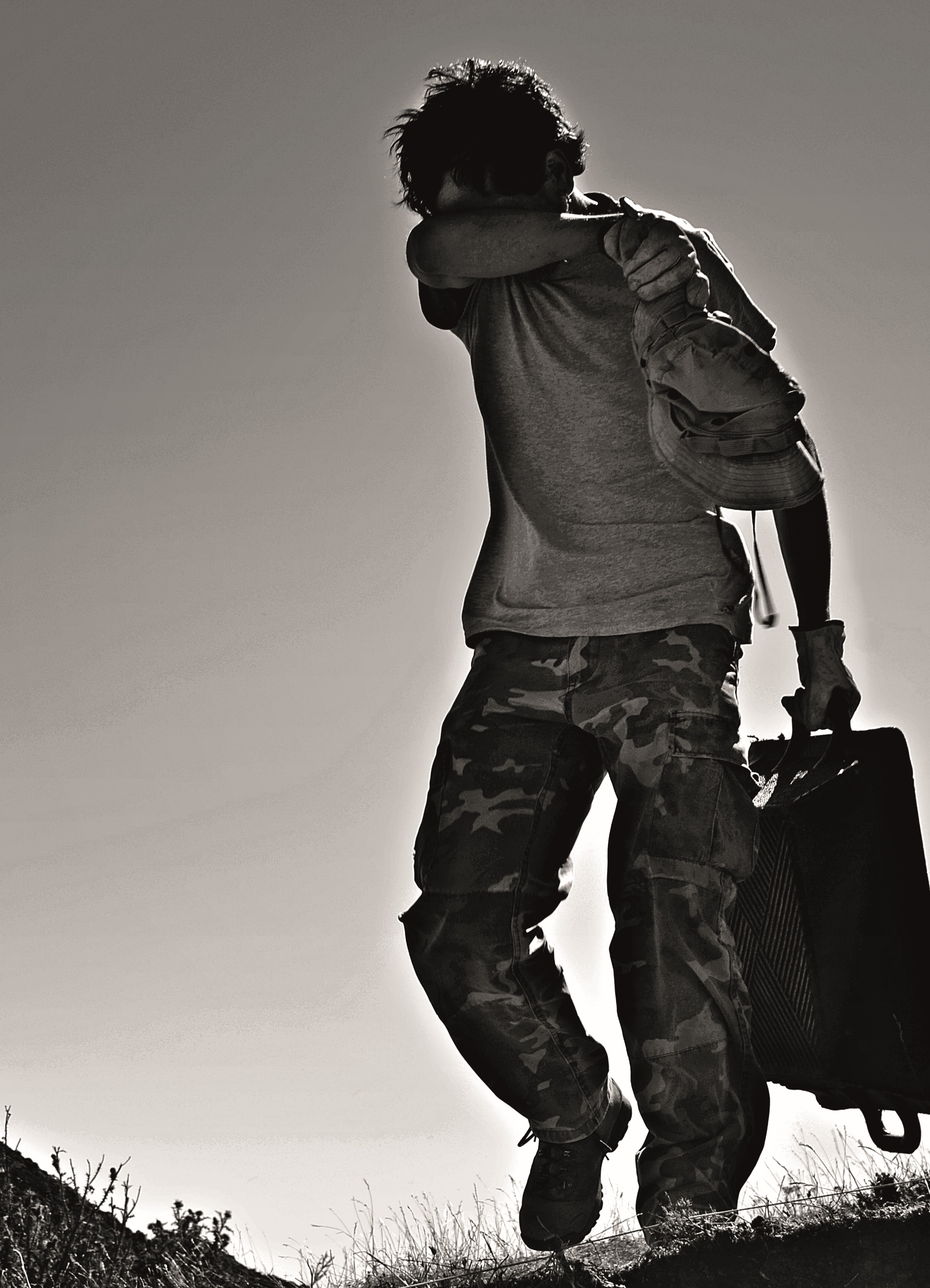
This image was taken at an archaeological site in the north of Palencia (Spain) back in 2016. It was a very hot summer day. The site is located on top of a hill, occupying a strategic position. It is home to a fortified settlement from the Iron Age that was besieged after the Cantabrian Wars by Augustus during the Roman Empire. It was not occupied again until the Spanish Civil War (1936-39), when it was once again a battlefield for the Republican military detachment that entrenched itself there. It fell after an ambush by Franco's Nationalists. My companion in the picture, a great archaeologist, had just come from emptying a bucket full of sand when the wind picked up.
I was taking archaeological control photos, but from time to time... I couldn't resist taking some pictures of my colleagues so they would became a nice memory. I heard my colleague say "the bucket of soil almost flew away!". I turned around with the camera and captured the moment when he covered his eyes. This image is neither artistic nor professional, but I think it shows very well what field archaeology is all about; dirt in the hands, dust in the eyes, wind, heat and lots of beautiful memories. My camera, a Nikon d3100, survived that and many other campaigns. Now it is broken in 20 places, with spare lens parts that are no longer manufactured. But even though I had to buy a new one, I don't plan to throw it away. It was my first camera as an archaeologist and I hope that in the future it will be a beautiful archaeological relic when I am buried with it!
Micaela Sinibaldi: Submission 117
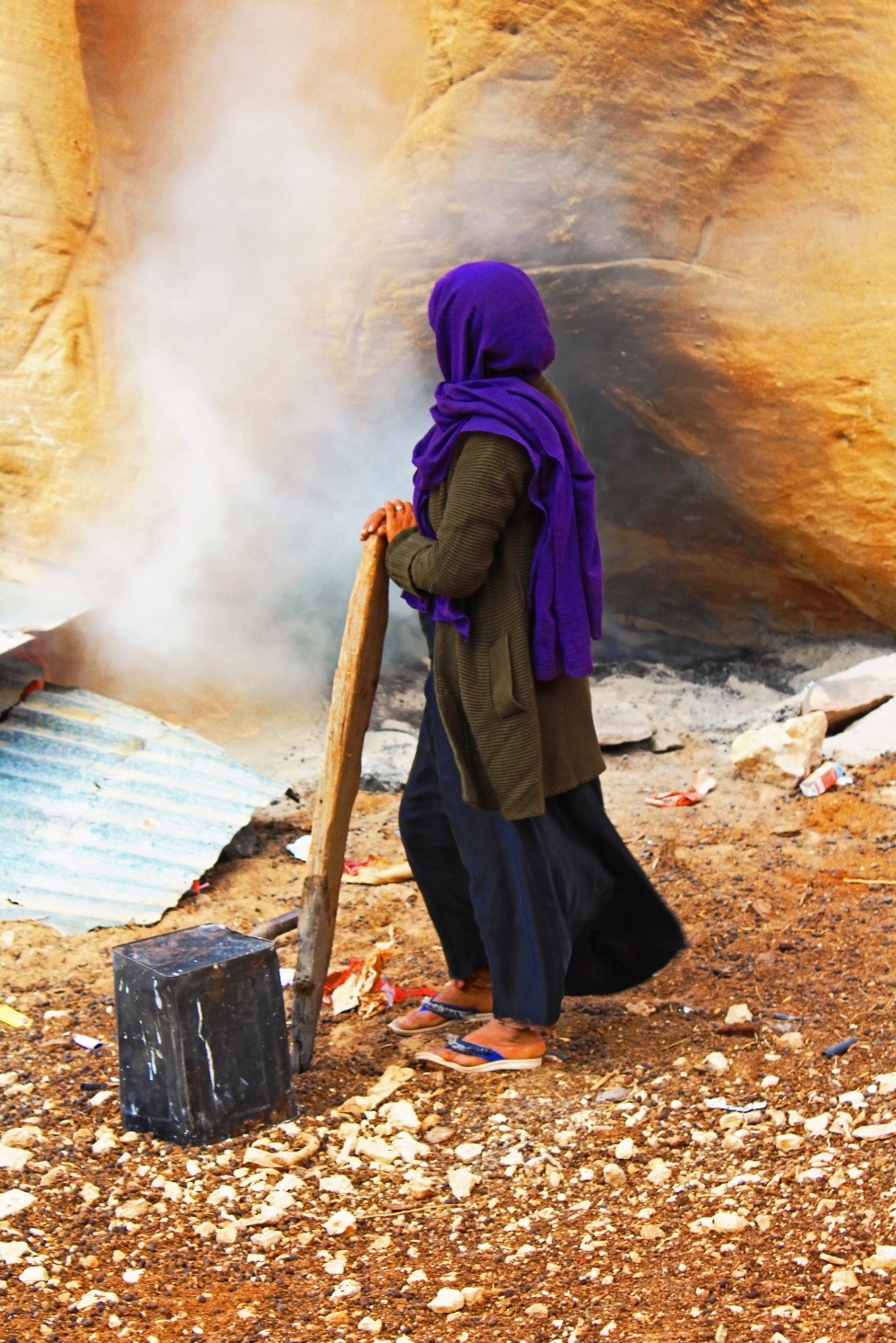
Tabun ovens for the preparation of bread are part of a very long-standing culture in the Middle East. As part of a project aimed at reconstructing the history of Petra after the Byzantine period, which is traditionally but erroneously thought to be a substantial abandonment of the area, excavations by the Islamic Baydha Project at Beidha have investigated a village of the Middle Islamic period. Here, several domestic structures included tabun ovens that are identical to those still used today in the area. Current studies have recorded that the material culture of Petra in the Islamic period is characterized by a particularly intense longevity that includes aspects of technology of ceramic production, building techniques, and other elements of daily life.
The Islamic Baydha Project gives particular importance to the interaction and synergic effect of the three aspects of archaeological research, archaeological training and community engagement. Understanding well the local, recent and modern material culture is a valued approach by the project, as it helps to interpret and understand at best the remains and their formation process, as well as the reasons behind the choices of long-lasting local traditions. For this reason, the team involves experienced individuals from the local community for better understanding the traditional building techniques and technological aspects. At the same time, this inclusive approach opens up for the local community the possibility to connect more closely to their own local cultural heritage and to the history of the community at the site.
This photo was taken during a visit of the team to a tabun in Beidha, to better understand and record the archaeological traces of a tabun found on the excavation. We learnt, also, that a tabun locally lasts an average of 10-15 years.
Often, as archaeologists, we work within a living community who can provide us with information not only on the latest history of the site, but also on crucial aspects of the local material culture. Research-driven archaeology can be a powerful and fundamental part of sustainable archaeology of the future, which must be relevant not only to archaeologists, but also, to modern, local communities, and must, therefore, take us “out of the comfort zone” and put “fieldwork in perspective.”
The protection of the intangible cultural heritage of the Bedouins of Petra is also one of the current UNESCO projects in Jordan.