TEA Photo Contest 2025: “Present Pasts & Past Presents”
Valentina Limina
FNRS, UCLouvain
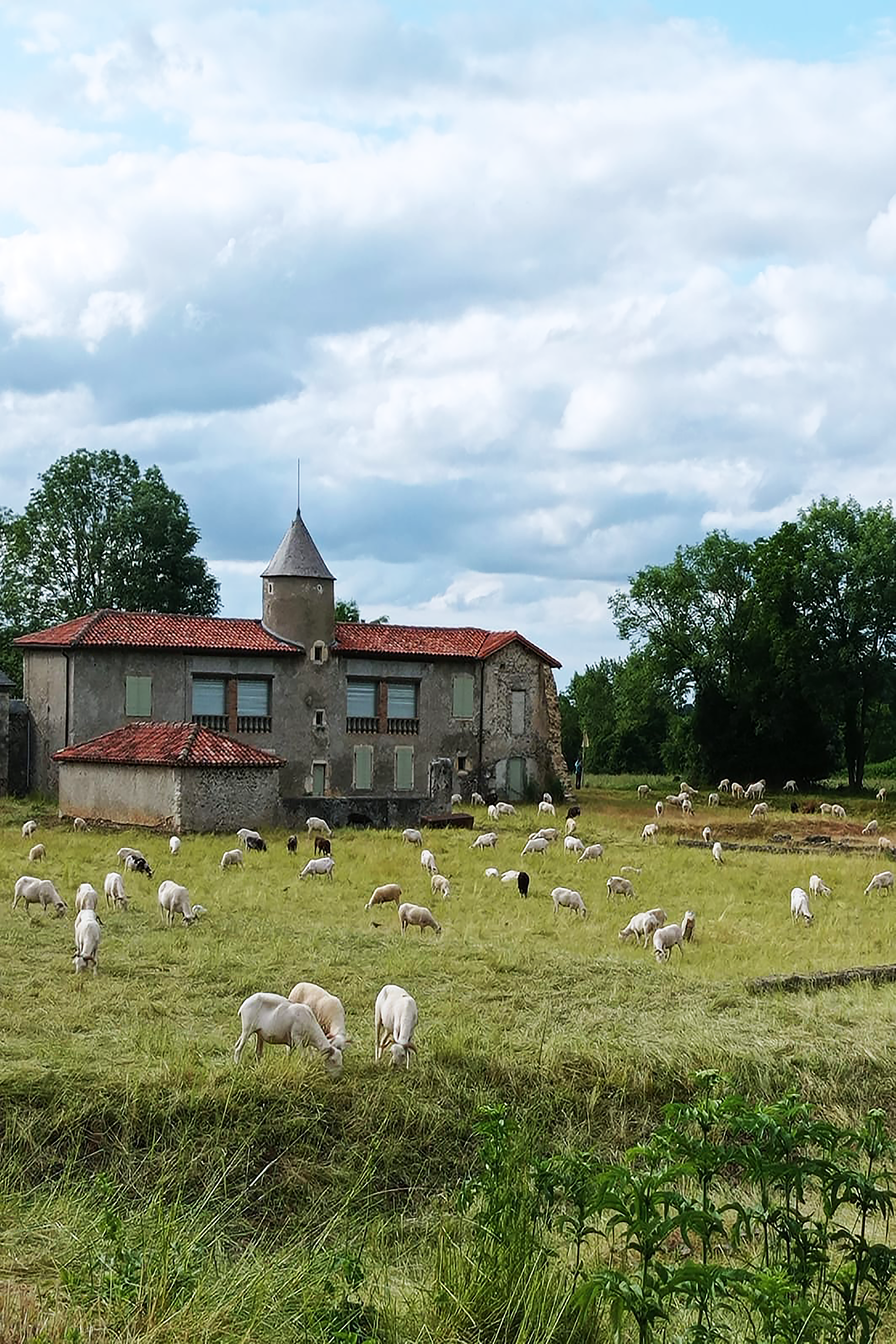
A wide-angle photograph shows a flock of sheep grazing among Roman ruins with the ferme Bordères in the background. We are at Saint-Bertrand-de-Comminges, Occitanie, in southern France, near the Pyrenees, where time flows differently. Perched atop a natural promontory once described by Gregory of Tours as “a city on the summit of a solitary mountain,” this ancient site merges stunning natural beauty with a rich and layered past.
Known as Lugdunum Convenarum, the city has preserved much of its ancient and medieval character, offering a unique sense of continuity. This photograph, taken at the end of June during the days leading up to the annual transhumance, shows a flock of sheep grazing in the ruins of the Roman forum—one of the most remarkable and well-preserved archaeological spaces in the region.
Facing the ferme Bordères, a traditional structure emblematic of local rural architecture, the scene highlights the deep connection between landscape, history, and ongoing human activity. The site is not frozen in time; it is alive and lived in. The tall grass, left unmown, allows the sheep to roam freely, recalling the enduring pastoral traditions of the area.
This seasonal practice is both practical and symbolic: it contributes to the ecological maintenance of the site while reaffirming the vital link between heritage and community. Here, archaeology is not confined to the past—it is actively part of the present. Initiatives such as Archéologie au village, led by archaeologist W. Van Andringa, involve residents in the exploration and preservation of their heritage.
In Saint-Bertrand-de-Comminges, archaeology does more than record history—it nurtures it. Wandering through the village’s “narrow, shadowy winding lanes,” one feels how silence itself seems to carry echoes of ancient voices. Here, history lingers not only in stone, but in the rhythm of local traditions and the landscape itself, blurring the boundaries between past and present.
Sophia Ayda Schultz
ARCH International
The ancient site of Asopos, along the coastline of modern-day Plitra in the Peloponnese, is extremely neglected and under-researched despite its extraordinary features, especially the offshore prehistoric structures that, according to marine archaeologist Dr. Nicholas Flemming (who discovered Pavlopetri, the UNESCO-declared world’s oldest submerged city), may date back as far as 5,000 years, possibly the Neolithic. This would make Asopos potentially older than nearby Pavlopetri.
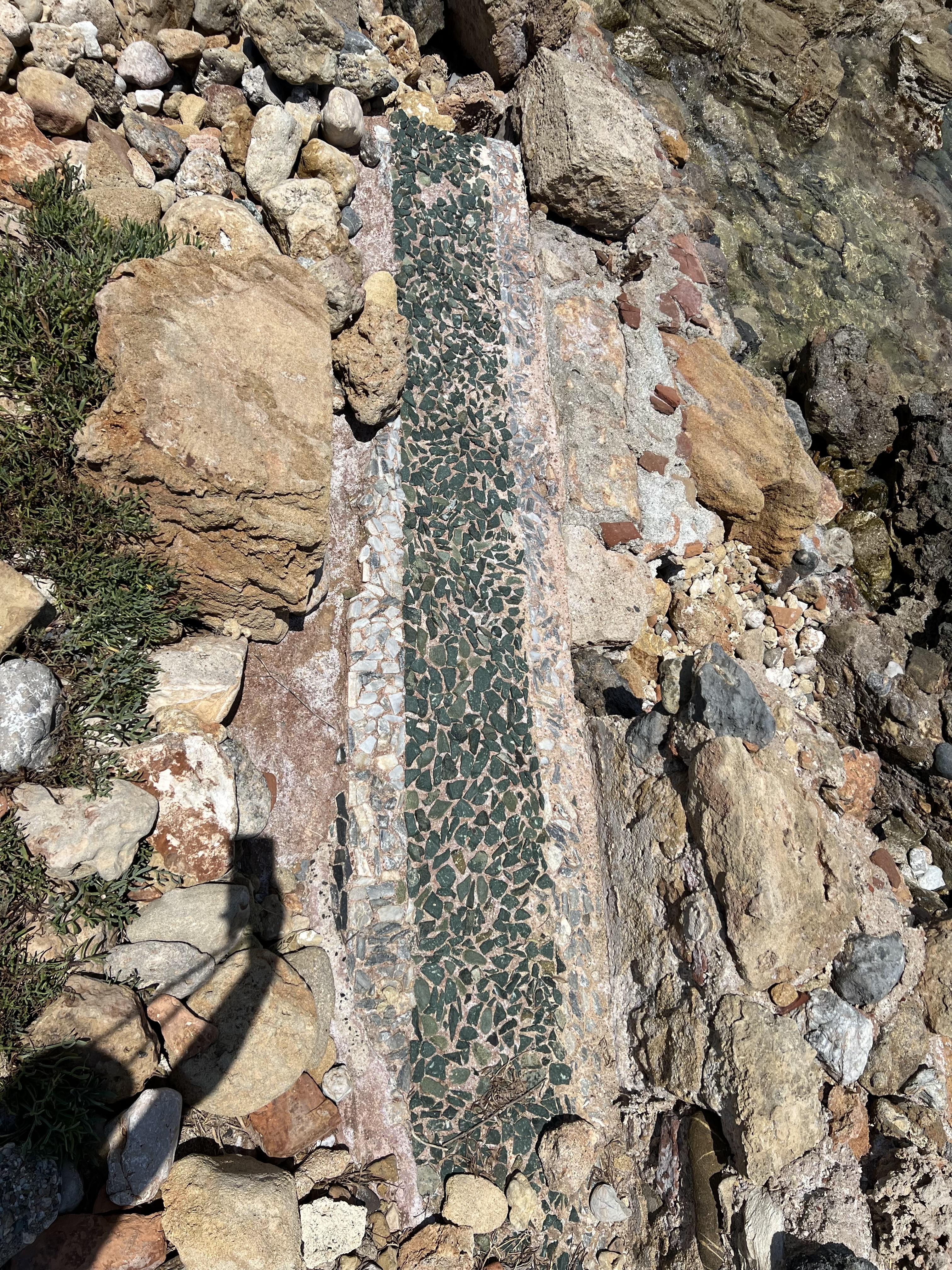
The photo submitted was taken onsite in June 2025 and shows a floor mosaic at the Ancient Asopos site. While Roman and Byzantine ruins are visible along the shoreline, typical of many coastal sites in Greece, the truly exceptional feature lies about 100 meters south of the headland: standing dry-stone walls, submerged three meters deep (last confirmed in the early 2000s).
Built from large, water-rounded stones, these walls were stacked without mortar, similar to rural dry-stone sheepfolds, but far thicker, more uniform, and more resilient. Despite expert missions to the site and academic publications over the decades, beginning with surveys in the 1960s, no formal archaeological survey has ever been conducted.
Greek authorities have historically prioritized the more visually striking Roman mosaics and structures on land. However, the submerged site at Asopos is far more archaeologically significant because of its rarity. Its survival is at risk from neglect, erosion, and storm damage.
Experts recommend that a short, focused research mission— including drone photography, underwater mapping, geological analysis, even basic snorkel documentation, and search for fragments of pottery that might provide dates—could confirm the site's significance. As Nic Flemming put it: “This is important beyond belief. There has never been a submerged prehistoric site found with standing walls.”
I hope the photo will also help raise awareness around the state of affairs of Greece's underwater antiquities.
Transient Eternity: The Tomb of Dexileos in the Age of Climate Change
Franziska Lehmann
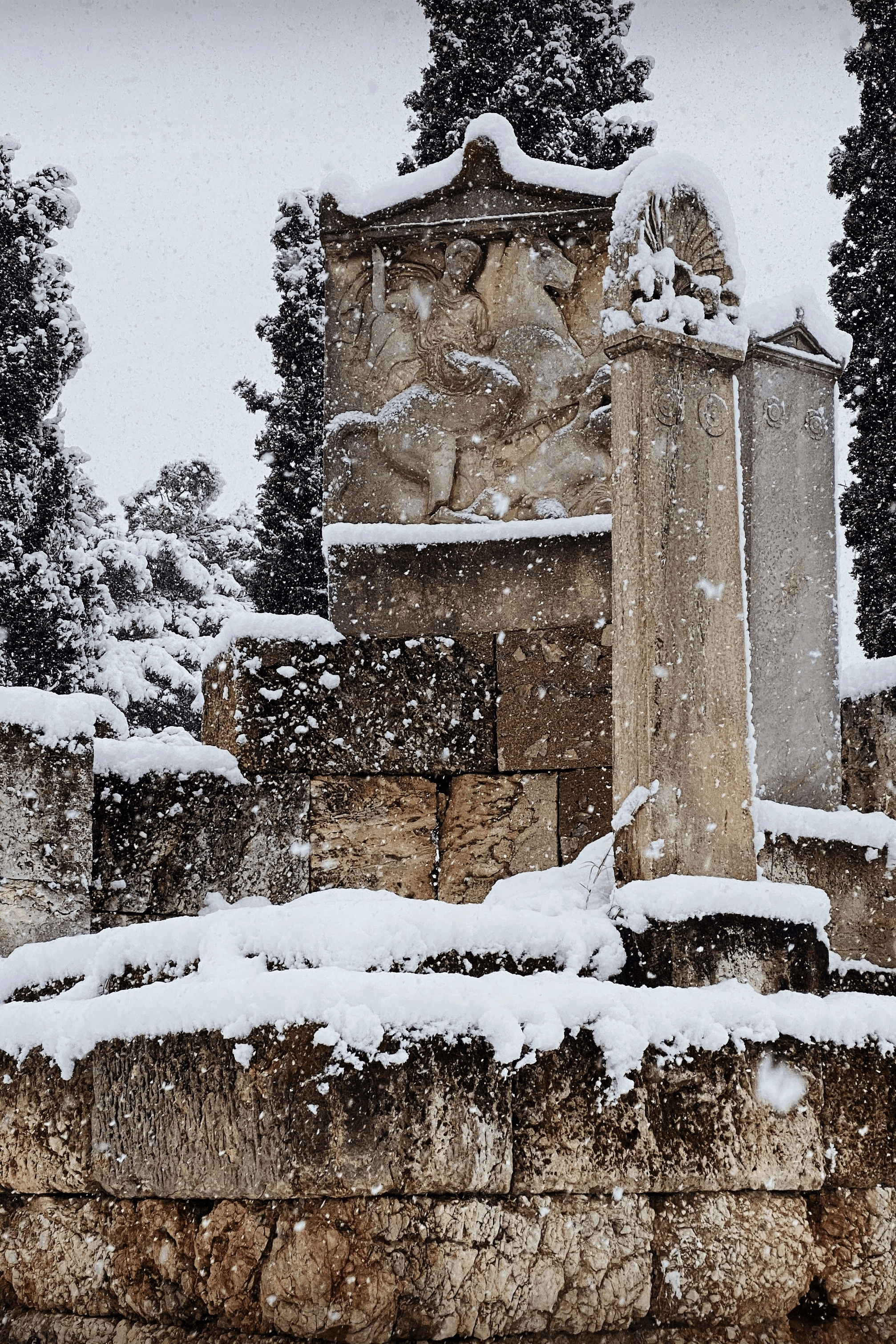
Taken in February 2021, this image shows the burial ground of the Lysanias family from the Demos Thorikos, located in the Kerameikos district of Athens. At the centre stands the equestrian monument of Dexileos, a young Athenian who died in the Corinthian War in 394 BC. The classical funerary stele commemorates not only the virtues of an idealised citizen, but also reflects the self-image of Attic polis society.
The archaeological relevance of the site is multifaceted. The Kerameikos was both a necropolis and an important access point to the city – situated along the Sacred Way and Kerameikos Street. The tomb reliefs there provide essential insights into the social structure, artistic development and political symbolism of the Classical period.
However, this silent testimony to ancient memorial culture is facing new challenges today. Like many open-air sites around the world, the Kerameikos is increasingly exposed to the effects of climate change, with extreme weather conditions, increased humidity and biological weathering threatening the sensitive marble surfaces. Air pollution, increased tourism and changing microclimates in urban areas also endanger the long-term preservation of archaeological monuments – not only in Greece.
This photograph documents an important monument and raises the question of our responsibility: how can we preserve our material heritage in the face of changing climatic conditions? While modernity has often attempted to preserve the past through museums or conservation measures, global environmental changes are forcing us to reconsider our approach to cultural heritage preservation.
Thus, the monument to Dexileos, which once glorified the values of a bygone era, becomes a symbol of an urgent new narrative: the protection of memory in the face of a changing planet.