TEA Photo Contest 2024: “Archaeology: Art or Science?”
Archaeology is art. And science.
João Vincíus Chiesa Back
University of Minho & University of Évora
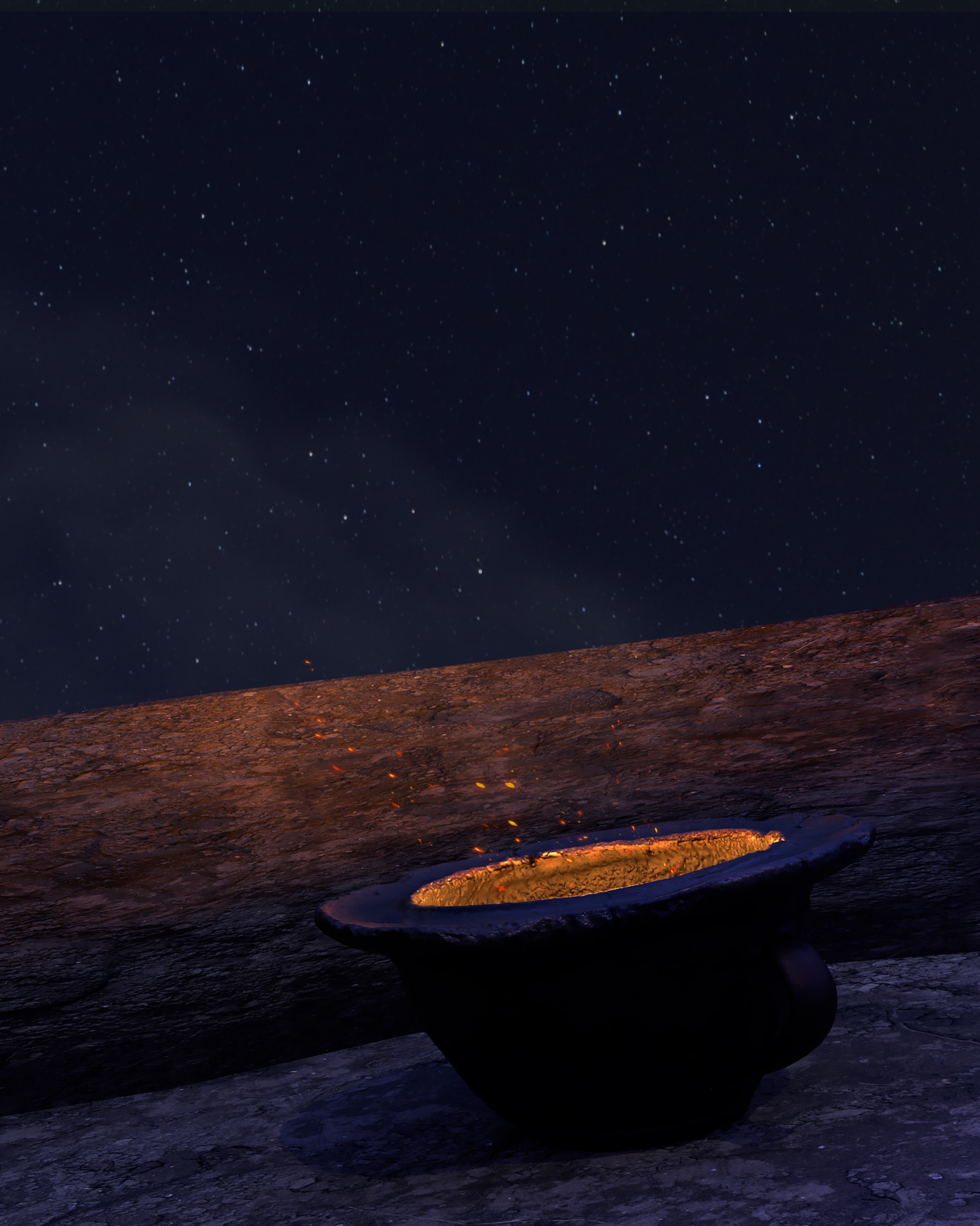
This image simulates a Bronze Age funerary context from the northwest of the Iberian Peninsula.
Based on photogrammetry and 3D modeling, the image symbolizes the use of a horizontal rim vessel
discovered in a grave at the Quinta do Amorim 2 archaeological site (Braga, Portugal), which was the
main focus of my presentation at EAA 2024.
Since the late 19th century and throughout the 20th century, archaeologists have observed traces on
the inner walls of this type of vessel, particularly on the side opposite the handle, which they
interpreted as possibly being soot and/or organic residues. Recently, studies jointly coordinated by
Dr. César Oliveira (Hercules/University of Évora) and Dr. Ana Bettencourt (Lab2PT/University of
Minho) have investigated the chemical nature of these residues in well-documented funerary contexts
using Gas Chromatography-Mass Spectrometry (GC-MS). The detailed analysis of these traces
demonstrates how closer collaboration with the so-called ‘hard sciences’ can provide crucial insights
into the probable contents of these types of vessels, which are characteristic of Bronze Age funerary
contexts from Northwest Portugal and Spain.
The present digital drawing of the vessel and the grave, created from plans drawings and based on
both 3D modeling and photogrammetry of the vessel, demonstrates the essential link between
science and art in archaeology. Whether through analytical chemistry techniques or the use of digital
art software, archaeological interpretations clearly highlight – just as the fire likely used in the Bronze
Age ritual practices mentioned – how we can further enrich our understanding of the human past.
Just as Leopold von Ranke argued that history is both art and science, and that this dual nature does
not diminish its credibility, we hold the same view regarding archaeology. Archaeology is art. And
science.
NB: This issue’s cover is graced with a simulation of a horizontal rim vessel from the Bronze Age site of
Quinta do Amorim 2 (Portugal).
Archaeology: Art, Science and the beauty of stress
Heide Wrobel Nørgaard
Moesgaard Museum, Denmark
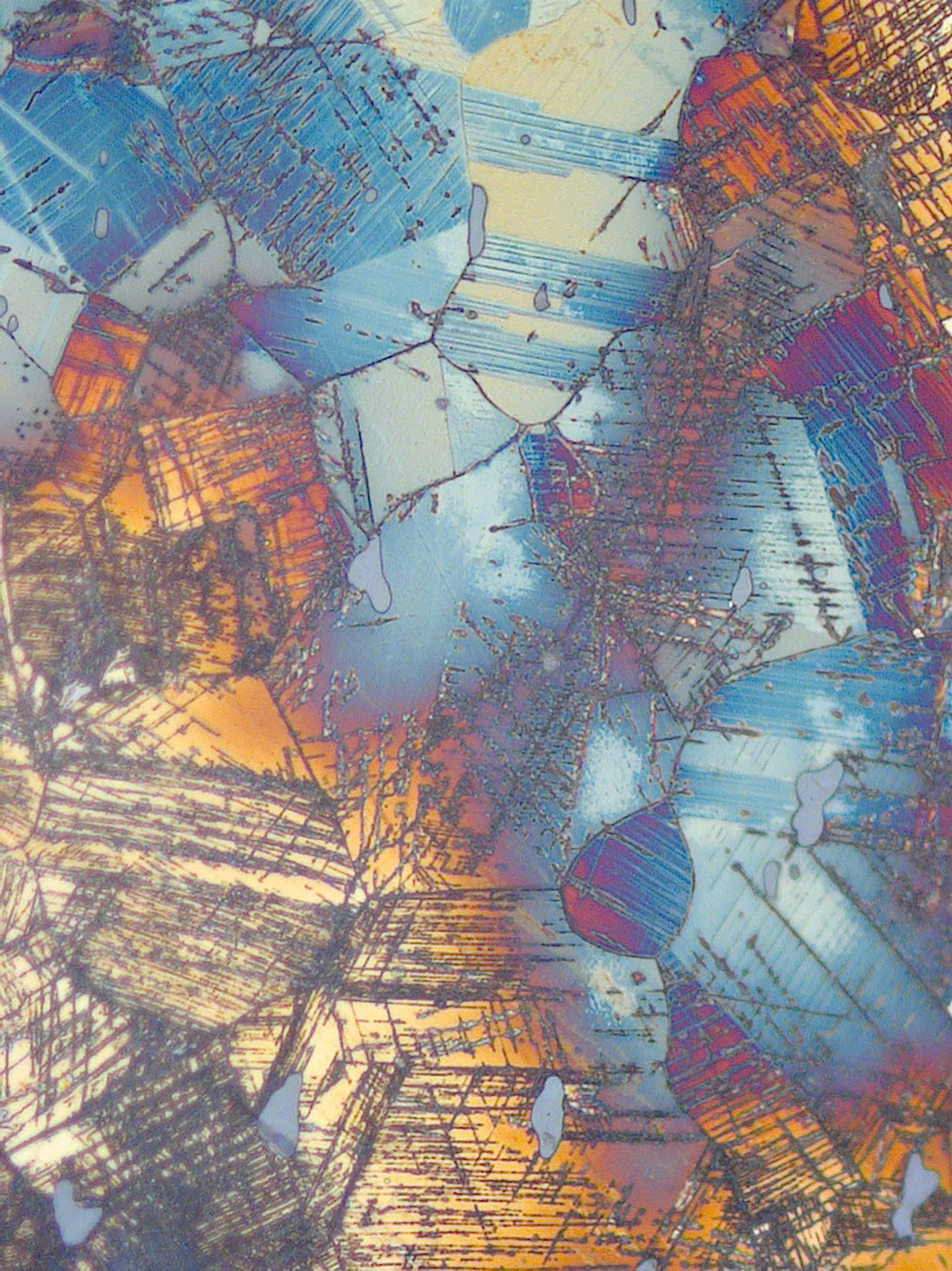
Archaeological science can also be a work of art! This is not a picture made by Hundertwasser or a
famous cubistic artist; instead, it shows the metallographic structure of a small piece of metal that
hides the secrets of crafting. In fact, this microphotograph comes from a Scandinavian neck collar from
1300 BC, and it shows the effects of stress!
All the fine black lines are caused by stress through deformation within the last working step.
However, the artefact has already been exposed to greater stress, which is reflected in the crystals.
The crystals show that major deformation processes have taken place during manufacture. The
evidence of this old stress is much more colorful and shows itself in the linear color differences in the
single blue or purple crystals, the so-called annealing twins. Such twins are formed when highly
stressed and deformed crystals are annealed (heated) and the crystal structure relaxes. This beautiful
mixture of colours, shapes and shadows is the reward of working with archaeometallurgy. The metals
do not reveal their beauty without work (and science!). The archaeologist needs to ask the right
questions, needs to do the correct preparations and needs to know which crystallographic structure
can inform about which crafting process.
The work with metallography can help to inform about craft techniques, technological shifts, raw
materials and skills and even about regional differences and styles. But it is only valuable when used
on a source critical investigated material base. Thus, in order to see this beauty (both aesthetic and
informational), you really need to know your material!
In this case, the neck collar is cast and then hammered afterwards into its final shape. The decoration
(the area of the biggest stress) is applied post casting, and the collar is not annealed after the last
working process.
Archaeology is art, and science and the art of science all at once.
“Seeing through”
Nicolas Vanderesse
PACEA, CNRS, University of Bordeaux
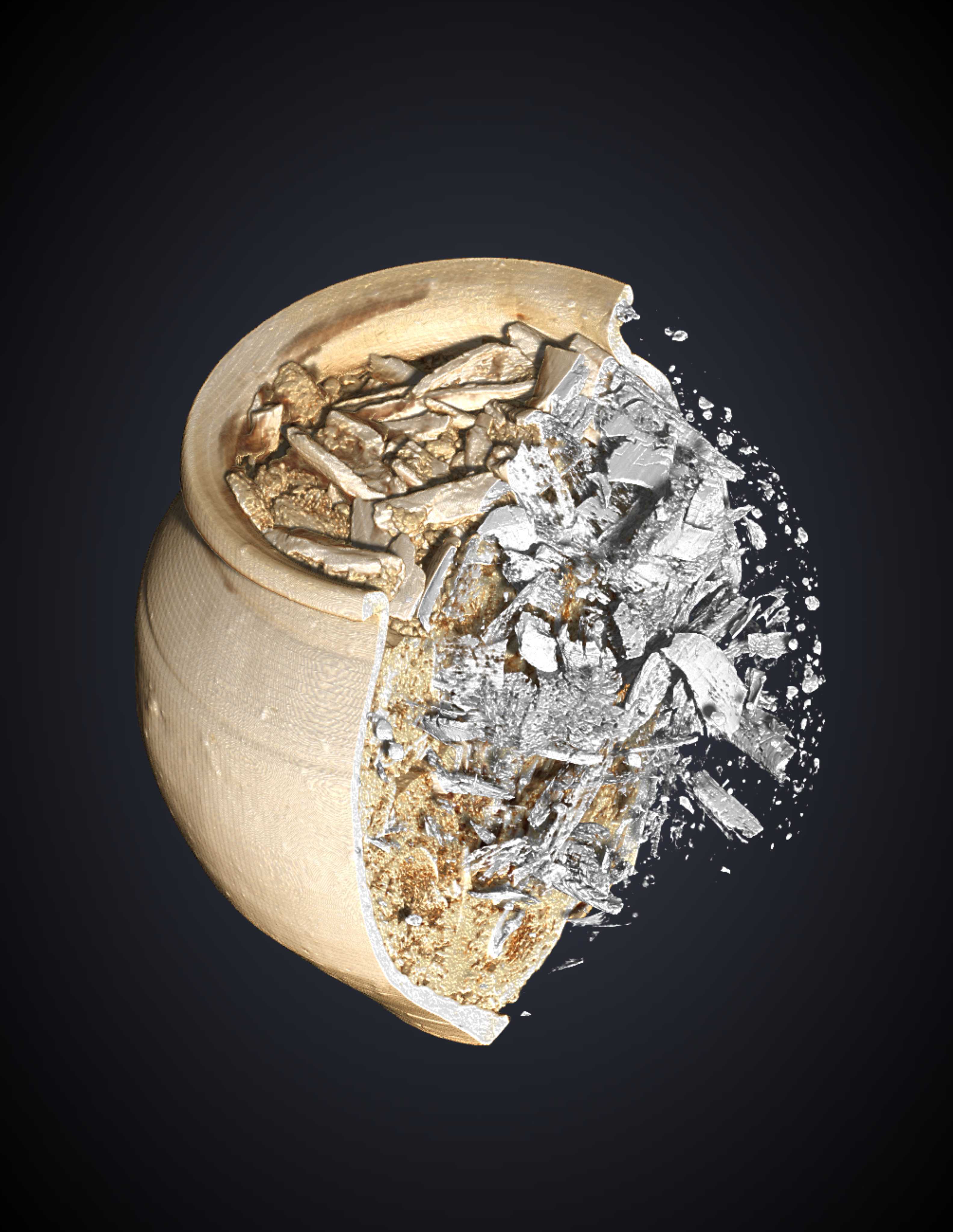
"The fairest thing we can experience is the mysterious. It is the fundamental emotion which stands at
the cradle of true art and true science." It is with these words from Albert Einstein that we would like
to introduce this funerary urn, originating from the Gallo-Roman necropolis of Excisum, France (1st
century AD). Displayed here in false colours, it has been analyzed by X-ray microtomography, a noncontact
technique that produces three dimensional images of the internal structure of objects. The
bones are clearly evident due to the relatively high density that make them appear brighter than the
sedimentary content of the urn. This visualisation helps in the assessment of the spatial distribution
of the bones before their manual removal for further analysis.
The mystery of this urn is doubled: What does the urn contain, and what were the funerary practices
that led to the conception of this funerary vessel? The study of the bones has led to the conclusion
that one third of them are of animal origin, and the rest belong to a single, 10–14-year-old person.
Ancient written sources show that in Gallo-Roman times, funeral ceremonies were ritualized and
codified: burying the dead was an art. However, only the final deposit has survived to the present day.
It is up to the archaeologist to gather all the clues needed to retrace this process, possibly with the
help of advanced characterization techniques that complement his or her expertise.
So, what about archaeology, art and science? Let's just say that some images speak for themselves:
given a reasonable amount of post-processing in an image analysis software (Comet's Dragonfly in the
present case), archaeological mysteries can turn into aesthetic experiences.