TEA Photo Contest 2022: “What is the spirit of archaeology in 2023?”
Archaeologists and our favourite tools
José Nicolás Balbi
Colchester Archaeological Group, UK
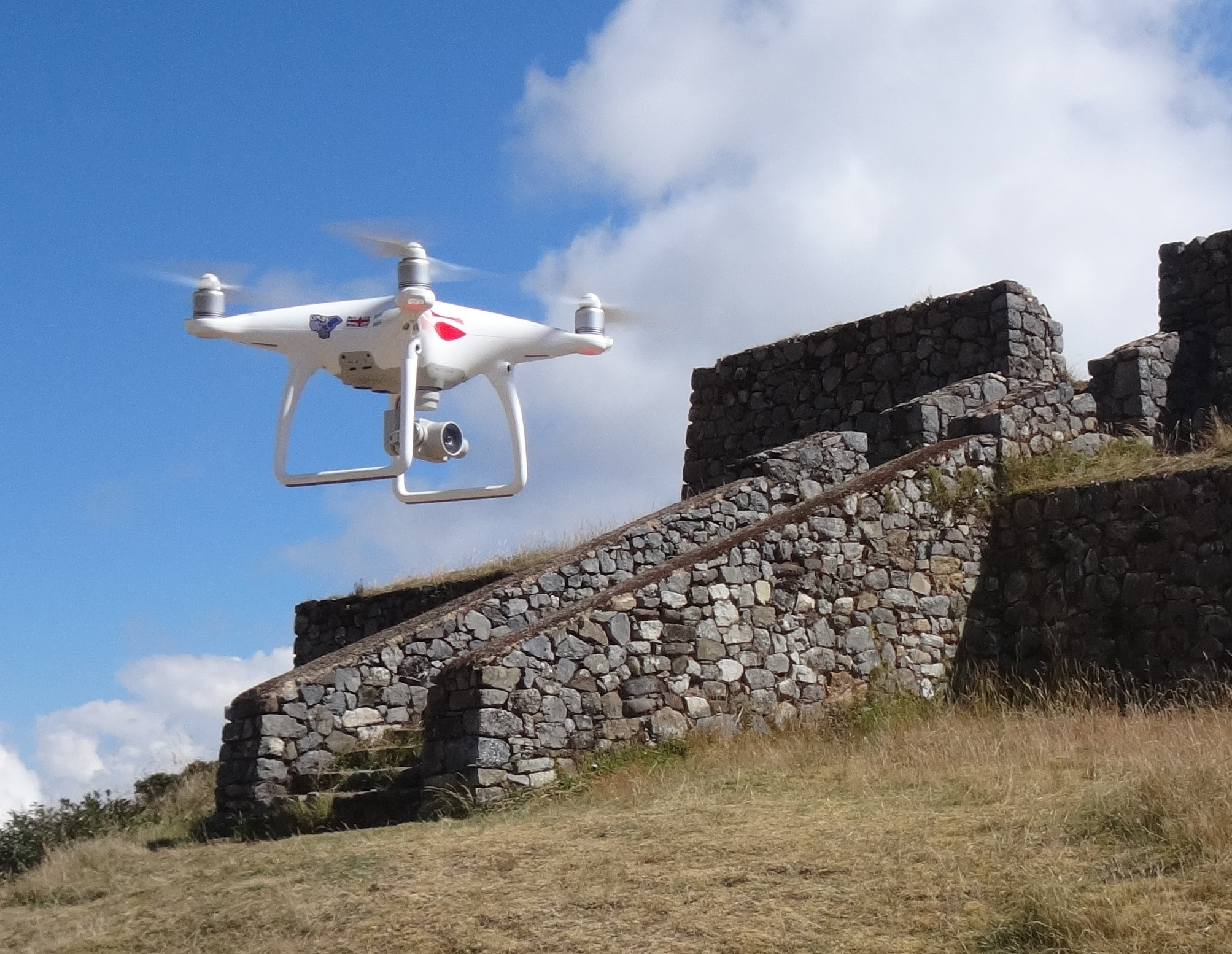
At 3400 meters above sea level in the Peruvian Andes, about 36 kilometres from the nearest town of
Andahuaylas, stands a structure called an Ushnu. It is a ceremonial centre from the Inka culture. The
Inka built an extensive network of roads (the Qhapac Ñan) known to tourists as ‘the Inka Road,’ which
runs through the largest empire in the Americas prior to the Spanish Conquest (from 1492). Along this
path (and preferably at higher elevations), similar structures were built as temples or administrative
centres. They can be found from present-day Ecuador all the way to Argentina.
In the photograph we see this Ushnu – determined to have been a place of solar worship based on a
series of measurements and orientation observations such as its alignment to the temporal mean
equinox – in the background and our small but vital drone whirring in the foreground. Since the
structure is located on a summit, the use of the drone to make measurements, videos and photos is
invaluable. Having excavated, studied and carried out astronomical measurements throughout this
area, I believe that this Ushnu is the most representative and beautiful of the many such structures
that exist along the route.
Of course, I have taken hundreds of photographs on the expedition, but I think this one gives the best
perspective both with regards to the place as well as the state of the modern archaeologist and the
technologies that we come to rely upon – our ‘best’ and ‘favourite’ tools so to speak.
For context, the work that we had started throughout Apurimac (from Cuzco to the sea) was
interrupted by the COVID pandemics and the consequent travel prohibitions of 2020-2021. Starting in
2022, we continued with the investigations and I believe that both the measurement results and the
photos of the place are the incentive that our colleagues need to reunite as a working team and return
to our professional search for new discoveries and cultural meanings. As I mentioned before, the
photograph simply reflects myself, this archaeologist, wanting to return and ready to put his best tools
to work once more.
Part of a common humanity
Roger Thomas
University of Oxford
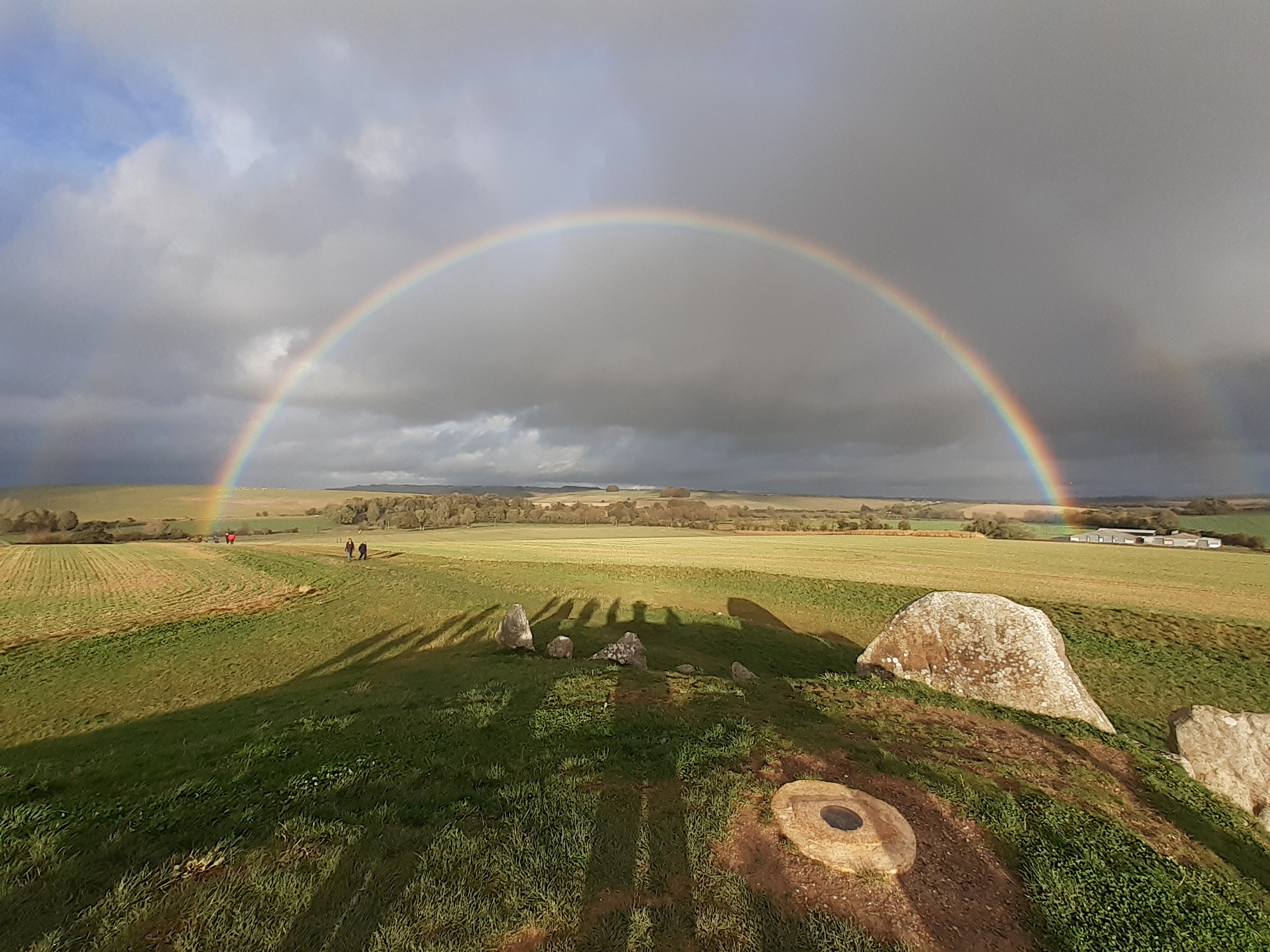
This photograph was taken on a student field trip to the Neolithic monument complex at Avebury in
Wiltshire (England). The trip was in November 2021. We had walked up to the West Kennet Long
Barrow. The setting sun was low in the sky to the west. We were standing on top of the prehistoric
mound, at its eastern end where the burial chamber is, when there was a sudden rain shower. Then
the rain stopped, the sun came out and this extraordinary rainbow appeared, exactly in line with the
long barrow. We were all stunned by the sight of it.
For me, this photograph, with the story behind it, brings out many messages about archaeology. There
is the pleasure of visiting amazing places with wonderful students and colleagues. There is the
invigoration that comes from walking in nature and in the fresh air, enjoying good conversation as you
go. There is the chance to have extraordinary experiences, like seeing a complete rainbow from a
major prehistoric tomb.
The photograph also brings to mind a fundamental aspect of archaeology. The cultures and world
views of the Neolithic people we study were unimaginably different from our own ‐ yet they were also
humans like us, part of a common humanity. I like to imagine that they would have been stunned, just
as we were, by the appearance of this rainbow at this special place. The long shadows seen in the
photo are those of the students on the field trip. In my mind, though, they could just as easily be those
of our prehistoric ancestors. They are standing far behind us but still casting their shadows into the
present.
When we listened to the heavens
José Farrujia de la Rosa
La Laguna University
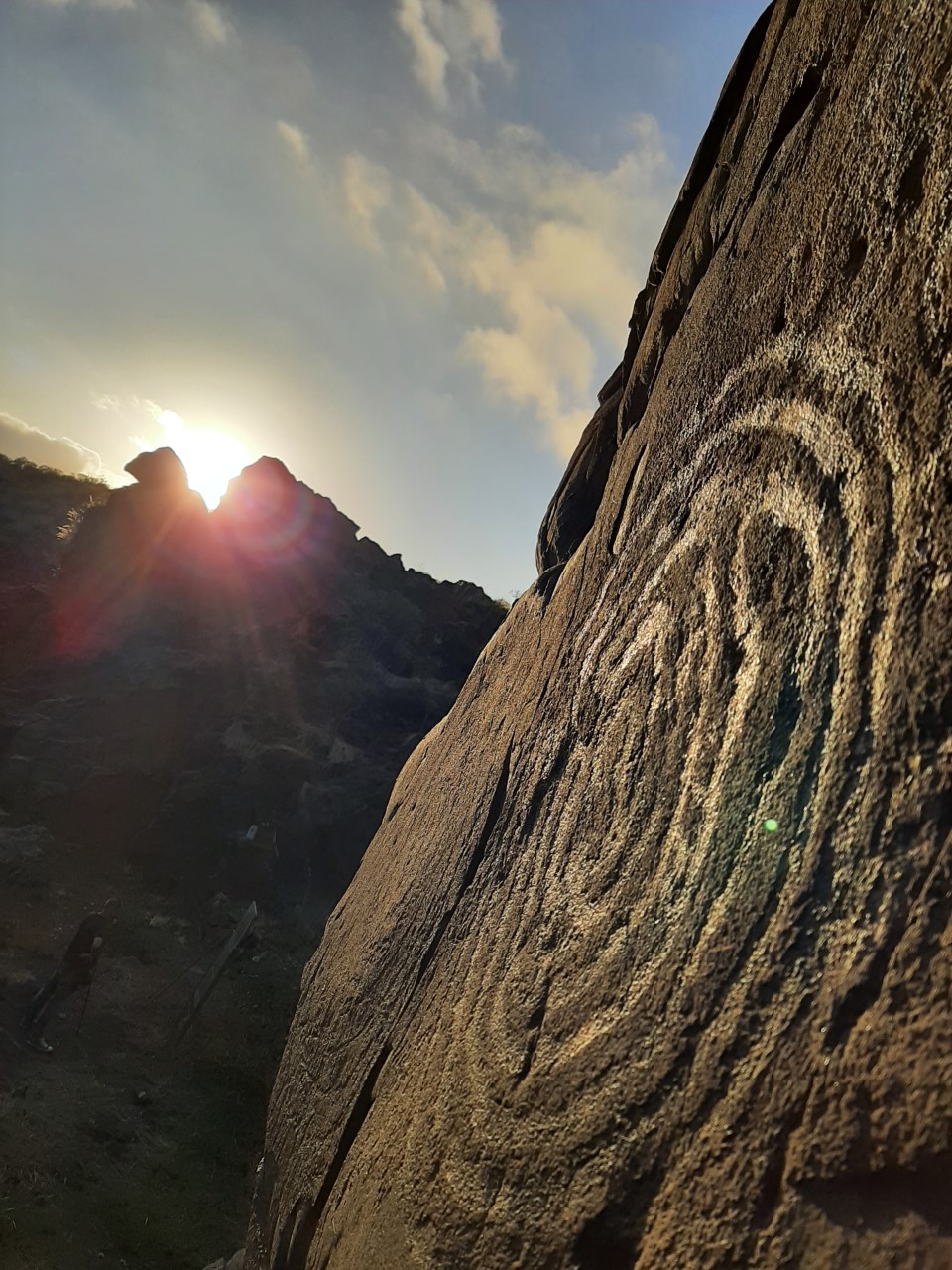
Ancestral cultures based on the herding of livestock and agriculture, such as the indigenous people of the Canary Islands, enjoy their principal celebrations during the summer. At the sun’s highest orbit, the ancestral islanders began to harvest their crops and brought together breeding herds to guarantee the next generation of goats. This marked the beginning of the indigenous year.
Announced by the solstice, it was important to know when the sun began to linger in the sky and when summer began. Each year, during the summer solstice, La Palma’s surrounding indigenous population gathered at the site depicted in the photo, to celebrate and thus give strength to the sun. During these days, even today and at sunset, the sun sneaks through the hole that can be seen in the silhouette of the mountain and illuminates the rock on which the indigenous people engraved the spirals. That is why they chose these rocks of the ravine, and not others, to leave their mark, because right there ‘Magec’ the sun, projected and continues to project its light at sunset and announcing the arrival of summer.
There was a time when heaven spoke to us and we knew how to listen. Archaeology today can keep the echo of the past alive, and in so doing, help us better understand our surroundings and their value. They offer us an ancient perspective on life and the beliefs of those who, before us, paved the way on this earth.
This photo was taken at sunset on June 17, 2022 (La Palma, Canary Islands) and captures the moment when the setting sun directly illuminates the plaque and its spiral design.